
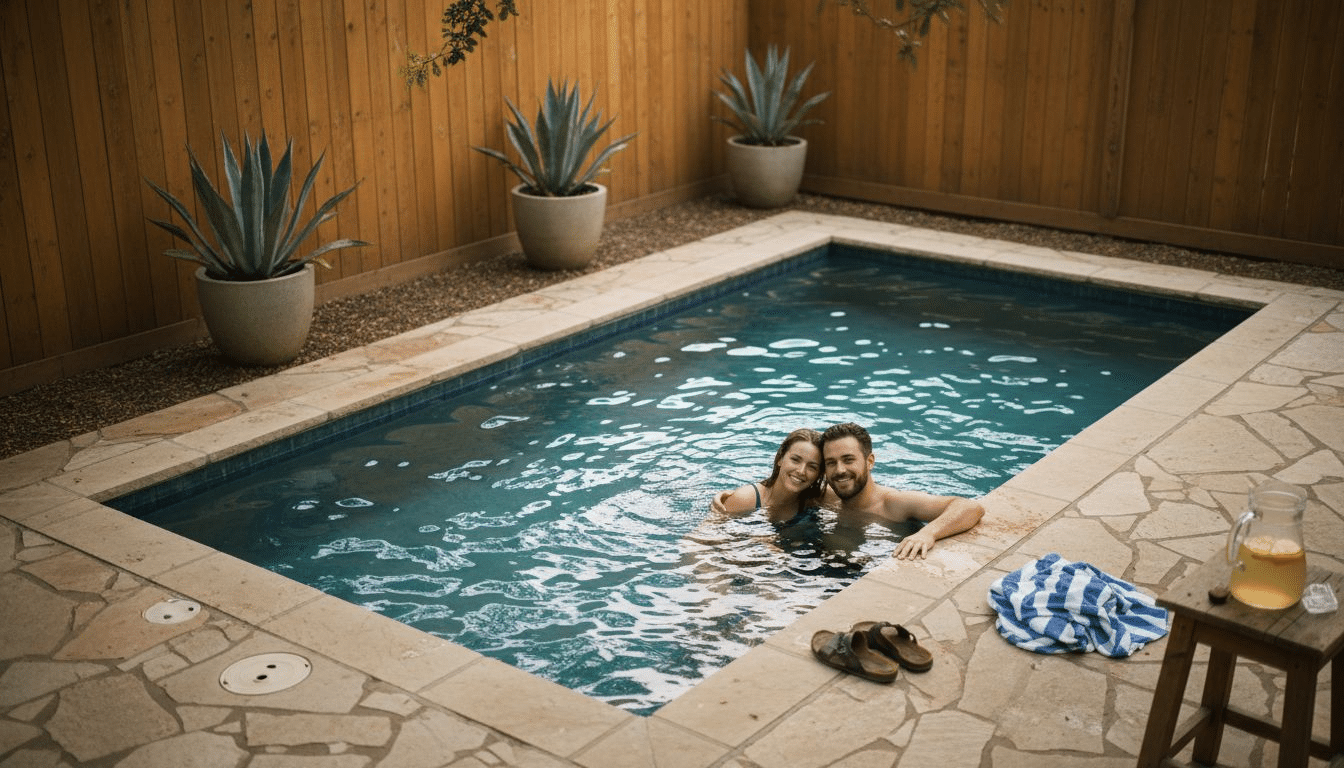
Most American homeowners crave a private retreat where luxury meets comfort right in their backyard. In Montgomery County, TX, the rising trend of custom plunge pools is transforming ordinary outdoor spaces into year-round havens for relaxation and style. With plunge pools using about 80 percent less energy and water than traditional options, you get the perks of premium amenities without sacrificing efficiency. Discover how a tailored plunge pool can elevate your American backyard into the perfect spot for cooling off and unwinding.
Table of Contents
- What Is a Plunge Pool? Core Concepts
- Types of Plunge Pools and Their Features
- Design, Installation, and Maintenance Essentials
- Cost, Value, and Return on Investment Factors
- Plunge Pools Versus Traditional Pools in Texas
Key Takeaways
| Point | Details |
|---|---|
| Plunge Pool Definition | A plunge pool is a compact swimming pool designed for residential backyards, offering a luxurious water feature in minimal space. |
| Material Options | The three main types of plunge pools are concrete, fiberglass, and vinyl-lined, each offering different customization and installation benefits. |
| Cost Efficiency | Plunge pools typically range from $15,000 to $30,000, making them a more affordable option compared to traditional pools while increasing property value. |
| Versatility | Plunge pools provide therapeutic features and aesthetic benefits, making them well-suited for Texas homeowners with limited outdoor space. |
What Is a Plunge Pool? Core Concepts
A plunge pool is a specialized compact swimming pool designed specifically for residential backyards, offering homeowners a luxurious and space-efficient water feature that provides maximum relaxation in minimal square footage. Unlike traditional swimming pools, plunge pools are characterized by their smaller dimensions and deeper vertical design, typically ranging from 10 to 20 feet in length and 5 to 8 feet in depth.
Originally inspired by natural geological formations, modern plunge pools have evolved into engineered backyard amenities that serve multiple purposes. These unique water features can function as cooling stations, exercise areas, and aesthetic landscape elements. Their compact design allows homeowners with limited outdoor spaces to enjoy a custom water experience without requiring extensive property modifications or significant construction investments.
The core design of plunge pools emphasizes vertical depth over horizontal spread, creating a unique aquatic environment perfect for quick immersion, hydrotherapy, and compact luxury. Engineered with precision, these pools often incorporate advanced features like integrated seating, powerful jets for resistance swimming, and temperature control systems that transform them from simple water containers into sophisticated relaxation zones. Homeowners in Texas particularly appreciate plunge pools for their ability to provide instant cooling in the region’s intense summer heat while maintaining an elegant, minimalist aesthetic.
Pro tip: When considering a plunge pool, prioritize professional design consultation to ensure optimal placement, depth, and integration with your existing landscape design.
Types of Plunge Pools and Their Features
Plunge pools come in several distinct categories, each designed to meet specific homeowner preferences and architectural requirements. Residential plunge pools are primarily divided into three main types: concrete, fiberglass, and vinyl-lined installations. Each pool type offers unique structural characteristics and design possibilities that cater to different aesthetic and functional needs for Texas homeowners.
Concrete plunge pools represent the most versatile option, allowing complete customization in shape, depth, and integrated features. These pools can be seamlessly designed to complement existing landscape architecture, featuring built-in seating, custom tile work, and precise depth configurations. Fiberglass plunge pools offer a quicker installation process, with pre-manufactured shells that can be quickly integrated into backyard spaces. Vinyl-lined versions provide a cost-effective alternative, though they typically have more limited design flexibility compared to concrete installations.
Beyond material considerations, plunge pools can be further categorized by their specific functional design. Some homeowners opt for therapeutic models with powerful jets for resistance swimming and hydrotherapy, while others prioritize aesthetic models that serve as visual landscape focal points. Temperature-controlled versions have become increasingly popular in Texas, allowing year-round enjoyment by incorporating heating and cooling systems that make the pool functional during both scorching summers and mild winters.
Pro tip: When selecting a plunge pool type, consider consulting with local pool designers who understand Texas climate conditions and can recommend the most suitable materials and design features for your specific property.
Here’s a side-by-side look at plunge pool materials and their main advantages:
| Material Type | Customization Level | Durability | Installation Speed |
|---|---|---|---|
| Concrete | Highest; any shape/feature | Extremely durable | Slowest, requires onsite work |
| Fiberglass | Limited shapes/styles | Very durable | Fast, pre-manufactured shell |
| Vinyl-lined | Fewest design options | Moderately durable | Moderate, liner can be replaced |
Design, Installation, and Maintenance Essentials
Plunge pool design requires meticulous planning that considers both aesthetic appeal and functional performance. Careful engineering principles guide the installation process, ensuring structural integrity and long-term durability for homeowners. Professional designers must evaluate multiple factors including soil composition, landscape topography, drainage patterns, and local climate conditions specific to Texas regions.
The installation process involves several critical stages that demand precision and expertise. Initial site preparation includes excavation, leveling, and creating a stable foundation that can support the pool’s weight and withstand potential ground shifting. Structural considerations such as reinforced concrete foundations, proper water drainage systems, and strategic placement to maximize sunlight and minimize environmental impact are crucial. Modern plunge pool installations often incorporate advanced technologies like integrated filtration systems, energy-efficient heating elements, and smart control mechanisms that allow homeowners to manage temperature and maintenance remotely.
Maintenance of plunge pools requires a systematic approach to preserve water quality and structural condition. Homeowners should establish a regular maintenance routine that includes weekly water testing, chemical balance management, cleaning of filtration systems, and periodic inspection of structural elements. Specialized pool maintenance teams recommend quarterly professional assessments to detect potential issues early, including checking for minor cracks, evaluating sealing integrity, and ensuring all mechanical components function optimally. Texas-specific maintenance strategies must account for extreme temperature fluctuations and potential mineral buildup common in the region’s water systems.
Pro tip: Invest in a comprehensive pool maintenance contract that includes quarterly professional inspections and uses specialized water treatment protocols designed for Texas climate conditions.
Cost, Value, and Return on Investment Factors
Plunge pools represent a strategic investment for Texas homeowners seeking to maximize outdoor living spaces without incurring the substantial expenses associated with traditional swimming pools. Cost considerations reveal that plunge pools typically range between $15,000 to $30,000, offering a significantly more affordable alternative to standard pool installations while providing comparable aesthetic and functional benefits.
The financial value of a plunge pool extends beyond initial installation costs. These compact water features can increase property values by creating an attractive outdoor entertainment space that appeals to potential buyers. Energy efficiency represents another critical economic advantage, with plunge pools consuming approximately 80% less water and energy compared to conventional pools. Homeowners in Texas can expect reduced utility expenses and maintenance costs, making these installations particularly attractive in regions with high summer temperatures and water conservation concerns.
Long-term investment potential hinges on several key factors, including pool design quality, material selection, and professional installation. Concrete plunge pools tend to offer the highest durability and potential return on investment, with some designs increasing home market value by 5% to 8%. Additional value drivers include integrated features like heating systems, LED lighting, and custom landscaping that transform the pool from a simple water feature into a comprehensive outdoor living enhancement. Texas real estate markets particularly appreciate well-designed outdoor spaces that provide both aesthetic appeal and functional utility.
Pro tip: Consult with local real estate professionals to understand how specific plunge pool designs can maximize your property’s marketability and potential resale value.
Plunge Pools Versus Traditional Pools in Texas
The fundamental differences between plunge pools and traditional swimming pools become starkly apparent when examining their design, functionality, and suitability for Texas homeowners. Insurance and maintenance considerations play a significant role in determining the most appropriate pool option, with plunge pools emerging as a compelling alternative to conventional large-scale pool installations.
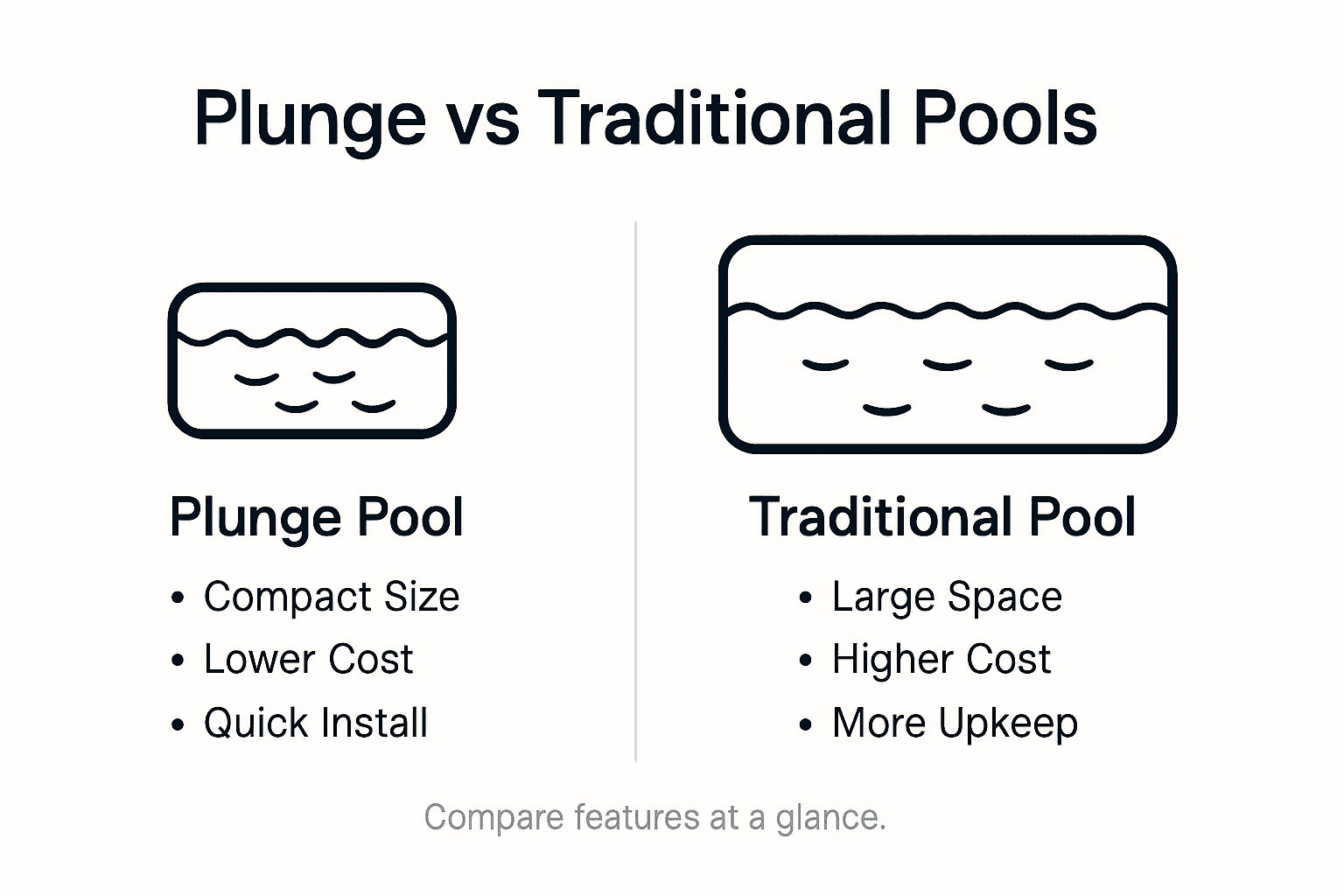
Traditional pools typically span 16 to 32 feet in length, requiring substantial backyard space and significant financial investment. In contrast, plunge pools measure between 10 to 20 feet, offering a compact solution that maximizes outdoor living areas without overwhelming the landscape. Energy efficiency presents another critical distinction: plunge pools consume approximately 75% less water and energy compared to standard pools, making them exceptionally well-suited to Texas’ hot climate and increasing water conservation needs. The smaller volume translates to reduced chemical usage, faster heating and cooling, and lower overall maintenance expenses.
Functionality diverges significantly between these pool types. Traditional pools prioritize lap swimming and large gatherings, while plunge pools focus on therapeutic relaxation, compact exercise, and aesthetic landscape integration. Texas homeowners increasingly prefer plunge pools for their versatility, allowing for built-in seating, powerful hydrotherapy jets, and temperature-controlled environments that transform small outdoor spaces into luxurious retreats. The reduced footprint also means easier installation, lower insurance liability, and more flexible design options that can be customized to complement existing architectural styles.
Compare key factors for plunge pools versus traditional pools in Texas:
| Attribute | Plunge Pool | Traditional Pool |
|---|---|---|
| Water Usage | Low, energy efficient | High, more evaporation |
| Maintenance Effort | Lower, simpler cleaning | Higher, more chemicals needed |
| Cooling/Heating | Heats and cools quickly | Slower, large volume |
| Backyard Fit | Fits small spaces easily | Requires large yard area |
Pro tip: Consult with local pool designers who understand Texas-specific climate challenges to determine the most cost-effective and functionally appropriate pool design for your specific property.
Discover Custom Plunge Pools Designed for Texas Backyards
If you have limited outdoor space but crave a luxurious retreat that cools you down during Texas summers, a plunge pool could be your perfect solution. As highlighted in the article, the compact size, energy efficiency, and therapeutic features of plunge pools address common challenges like space constraints, high maintenance, and climate suitability. Bliss Pools specializes in custom pool construction that brings these benefits right to your backyard. We understand the importance of combining deep relaxation, advanced heating and cooling, and aesthetic appeal to create a truly personalized oasis.
Ready to transform your outdoor living environment with a professionally designed plunge pool that fits your needs and lifestyle? Visit our website today to explore our expert design and installation services in Montgomery County, Waller County, and Northern Harris County, Texas. Contact Bliss Pools now for a free estimate and take the first step toward turning your backyard into the ultimate resort-style escape. Learn more about our custom pool construction and unlock the potential of your outdoor space.
Frequently Asked Questions
What is a plunge pool?
A plunge pool is a compact swimming pool designed for residential backyards, characterized by its smaller dimensions and deeper depth. Typically ranging from 10 to 20 feet in length and 5 to 8 feet in depth, they provide a luxurious water feature while maximizing relaxation in limited space.
What are the advantages of having a plunge pool instead of a traditional pool?
Plunge pools require significantly less space and investment compared to traditional swimming pools. They consume around 75% less water and energy, which leads to lower maintenance costs. Additionally, plunge pools offer therapeutic benefits with features like hydrotherapy jets and are more versatile in design.
How do I maintain a plunge pool?
Maintaining a plunge pool involves regular water testing, managing chemical balance, cleaning filtration systems, and periodic inspections for structural integrity. Establishing a routine maintenance schedule is essential for keeping the pool in optimal condition and ensuring water quality.
What types of plunge pools are available?
Plunge pools come in three main types: concrete, fiberglass, and vinyl-lined. Each material offers unique customization and installation speeds, with concrete providing the most design flexibility, fiberglass allowing quicker installation, and vinyl-lined pools being a more cost-effective option.