
Building a custom gunite pool in Montgomery County means more than picking a design and arranging the dig. The process includes a maze of permit rules drawn from both Texas state law and local codes, each shaped to guard your property and keep your family safe. Understanding the permit requirements upfront gives you more control over your timeline and peace of mind as your dream backyard pool moves from blueprint to reality.
Table of Contents
- Defining Pool Permit Requirements In Texas
- Types Of Pool Permits And Their Differences
- Key Legal Codes Impacting Pool Construction
- Application Process And Required Documentation
- Costs, Inspections, And Timelines For Permits
- Common Mistakes And Compliance Issues To Avoid
Key Takeaways
| Point | Details |
|---|---|
| Understanding Local Regulations | Familiarize yourself with specific permit requirements from your county’s building department to ensure compliance and avoid delays. |
| Prepare Comprehensive Documentation | Gather all necessary documents meticulously to enhance the likelihood of permit approval, including site plans and safety compliance plans. |
| Consult Professionals | Engage experienced pool builders to navigate complex regulations and streamline the permit process, ensuring adherence to local codes. |
| Plan for Inspections and Costs | Budget for permit fees and anticipate multiple inspections as part of your pool project to safeguard against unexpected expenses and delays. |
Defining Pool Permit Requirements in Texas
Building a swimming pool in Texas involves navigating a complex set of permit requirements that ensure safety, compliance, and proper construction. Homeowners must understand these regulations to successfully complete their pool project without legal complications or potential fines. The permitting process varies by county, but generally follows a structured approach designed to protect both property owners and the community.
In Texas, obtaining a pool permit typically involves several critical steps, which Travis County’s guidelines clearly outline. The primary requirements include:
- Submitting detailed site plans showing pool location and dimensions
- Providing engineering drawings that demonstrate structural integrity
- Verifying property zoning and setback requirements
- Documenting compliance with local safety codes
- Paying applicable permit fees
The regulatory framework for pool construction in Texas is comprehensive. State health regulations provide additional guidance on safety standards that go beyond basic structural requirements. These rules cover critical aspects like pool enclosures, fencing specifications, and drainage considerations that protect both homeowners and potential pool users.
Each municipality may have unique additional requirements, making it essential to consult local building departments before beginning your pool project. Montgomery County, for instance, might have specific regulations that differ from other Texas counties. Professional pool builders familiar with local codes can help navigate these complex requirements and ensure smooth permit approval.
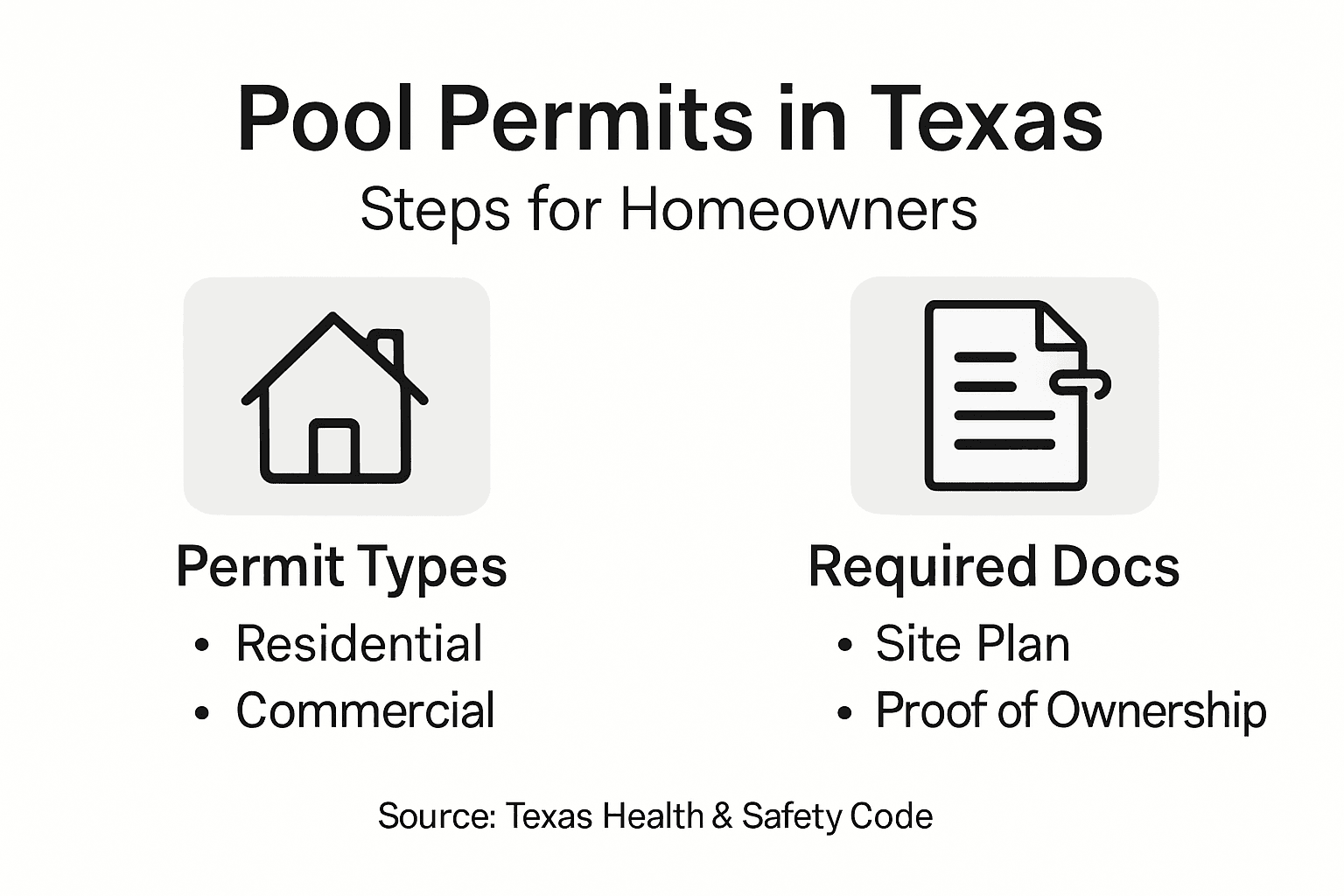
Pro tip: Always request a pre-application consultation with your local building department to understand specific permit requirements unique to your property and neighborhood.
Types of Pool Permits and Their Differences
Texas municipalities have developed a nuanced approach to pool permitting that reflects the complexity of swimming pool construction and operation. Residential pool permits vary significantly depending on the type of pool, its intended use, and specific local regulations. Understanding these distinctions is crucial for homeowners planning to install a new pool or modify an existing aquatic feature.
Georgetown’s permit guidelines reveal several key categories of pool permits that homeowners should be aware of:
- In-ground Pool Permits: Required for pools deeper than 24 inches
- Prefabricated Pool Permits: Specific documentation for pre-constructed pool installations
- Spa and Hot Tub Permits: Separate requirements for smaller aquatic installations
- Commercial Pool Permits: Distinct from residential permits with more stringent regulations
The complexity of pool permits extends beyond initial construction. Austin’s regulatory framework demonstrates that permits can be categorized into multiple types, including:
- Site Plan Review Permits
- Pre-Opening Inspection Permits
- Operational Permits
- Interactive Water Feature Permits
Residential pools typically require different permits compared to public or commercial facilities. While private pool owners face more straightforward permitting processes, the requirements can still be intricate. Each Texas county may impose unique regulations, making it essential to consult local building departments for precise guidance.
Here’s a quick comparison of residential and commercial pool permit requirements in Texas:
| Permit Type | Primary Focus | Regulatory Complexity | Inspection Frequency |
|---|---|---|---|
| Residential | Safety and structural integrity | Moderate, county-level codes | Standard, final and occasional |
| Commercial | Public health and operation | High, state and federal codes | Frequent, periodic and detailed |
This table outlines the typical documentation needed for pool permit applications in Texas counties:
| Document Type | Purpose | Special Notes |
|---|---|---|
| Site plan | Shows pool location | Must meet zoning codes |
| Contractor registration | Validates expertise | Required for professional builds |
| Barrier plan | Ensures safety compliance | Critical for code approval |
Pool permit requirements are not one-size-fits-all. Local regulations can vary dramatically between different Texas municipalities.
Professional pool builders can be invaluable resources in navigating these complex permit landscapes. They understand local codes, can help prepare necessary documentation, and ensure that your pool project meets all regulatory requirements from the initial planning stages through final inspection.
Pro tip: Contact your local building department early in the pool planning process to get a comprehensive understanding of the specific permit requirements for your exact property and pool type.
Key Legal Codes Impacting Pool Construction
Navigating the legal landscape of pool construction in Texas requires a comprehensive understanding of multiple regulatory frameworks that govern safety, design, and construction standards. Homeowners must be aware that pool projects are subject to a complex web of local, state, and national building codes that ensure structural integrity, electrical safety, and overall public protection.
Texas Department of State Health Services regulations outline critical legal codes that impact pool construction, including:
- Health and Safety Code provisions for swimming pool design
- Safety requirements for pool yard enclosures
- Specific standards for bathhouse and pool facility construction
- Operational guidelines to ensure public health compliance
The legal complexity extends beyond state-level regulations. Fort Worth’s building requirements demonstrate the intricate nature of pool construction codes, which typically incorporate multiple regulatory standards:
- 2018 International Swimming Pool and Spa Code
- 2021 International Plumbing Code
- 2020 National Electrical Code
- Local city-specific amendments and modifications
Electrical and structural requirements represent some of the most critical legal considerations in pool construction. These codes address crucial safety aspects like proper grounding, electrical circuit protection, structural reinforcement, and drainage systems. Each requirement is designed to minimize potential hazards and ensure the long-term safety of pool installations.
Pool construction legal codes are not mere suggestions – they are mandatory requirements that protect homeowners and their communities.
Professional pool builders play a crucial role in interpreting and implementing these complex legal requirements. Their expertise ensures that every aspect of pool construction meets or exceeds the stringent standards set by local and state regulatory bodies.
Pro tip: Request a comprehensive code compliance review from your pool contractor to ensure your project meets all current legal and safety standards.
Application Process and Required Documentation
Successful pool permit applications in Texas require meticulous preparation and a comprehensive understanding of documentation requirements. Residential pool permits involve a detailed submission process that demands precision and thorough attention to every administrative and technical detail.
Travis County’s permit application process outlines several critical steps for homeowners:
- Verify exact property location details
- Gather comprehensive construction information
- Collect required documentation
- Create an online county permitting account
- Submit complete application
- Track application status
The documentation requirements are extensive. Montgomery County’s comprehensive checklist typically requires the following documents:
- Completed permit application form
- Contractor registration documentation
- Proof of property ownership
- Detailed site and pool specification drawings
- Barrier requirement plans
- Gas riser diagrams for pool heaters
- Engineered retaining wall plans
- Separate permits for electrical, plumbing, and gas work
Technical drawings represent the most critical component of the application package. These documents must demonstrate precise compliance with the International Swimming Pool and Spa Code, including detailed specifications for structural design, safety features, and mechanical systems.
Incomplete or inaccurate documentation can result in significant delays or outright permit rejection.
Professional pool contractors understand the nuanced requirements and can help streamline the application process, ensuring all necessary documentation meets local regulatory standards.
Pro tip: Organize all required documents systematically and consider having a professional review your permit application before submission to minimize potential errors.
Costs, Inspections, and Timelines for Permits
Navigating the financial and procedural aspects of pool permit acquisition requires careful planning and understanding of municipal requirements. Pool permit costs and inspection processes vary significantly across different Texas counties, making it essential for homeowners to research local specific guidelines before beginning their pool construction project.
San Antonio’s permit framework provides insight into typical municipal requirements, with fees and inspection processes that homeowners should anticipate:
- Base permit fee of approximately $360
- Additional processing and administrative surcharges
- Multiple mandatory inspection stages
- Coordination with various municipal departments
Harris County’s permitting process reveals critical timelines and inspection protocols:
- Permit review typically takes 10 business days
- Inspections cover multiple critical areas:
- Site compliance
- Stormwater quality
- On-site sewer facilities
- Electrical systems
- Right-of-way regulations
- Permit validity is six months
- As-built certificates required for floodplain pools
Inspection stages represent crucial checkpoints in the pool construction process. These mandatory reviews ensure that every aspect of the pool meets local building codes, safety standards, and zoning requirements. Municipalities typically require inspections at key construction phases, including foundation, structural, electrical, and final completion stages.
Permit costs and inspection requirements are not just bureaucratic hurdles – they are essential safeguards protecting homeowners and ensuring community safety standards.
Professional pool contractors can help streamline the permit and inspection process, leveraging their experience to navigate municipal requirements efficiently and minimize potential delays or compliance issues.
Pro tip: Budget an additional 15-20% above your initial permit cost estimate to account for potential unexpected fees and multiple inspection requirements.
Common Mistakes and Compliance Issues to Avoid
Navigating pool permit requirements demands meticulous attention to detail and a comprehensive understanding of local regulations. Compliance challenges can derail even the most well-planned pool construction projects, potentially resulting in costly delays, fines, or mandatory modifications.
Harris County’s public health guidelines highlight several critical compliance issues homeowners must proactively address:
- Improper chemical and pH balance
- Inadequate safety equipment installation
- Poor pool drain visibility
- Failure to maintain required chemical standards
- Insufficient barrier and enclosure specifications
Common mistakes that can compromise pool permit approval and long-term compliance include:
- Incomplete or inaccurate site documentation
- Overlooking specific zoning setback requirements
- Ignoring electrical and plumbing code specifications
- Failing to obtain necessary separate trade permits
- Neglecting required pre-construction site inspections
Regulatory compliance extends far beyond initial permit acquisition. Municipalities conduct periodic inspections to ensure ongoing adherence to safety standards and original permit specifications. This means homeowners must maintain meticulous documentation and continuously meet established regulatory requirements.
A single overlooked detail can transform a dream pool project into a regulatory nightmare.
Professional pool contractors understand the intricate landscape of local building codes and can help homeowners navigate potential compliance pitfalls, ensuring smooth permit approval and long-term project success.
Pro tip: Maintain a comprehensive documentation folder with all permit-related paperwork, inspection records, and correspondence to streamline future interactions with municipal authorities.
Simplify Your Texas Pool Permit Journey with Bliss Pools
Navigating the complex pool permit requirements in Texas can be overwhelming. Between understanding local regulations, preparing detailed site plans, and complying with strict safety codes, homeowners often face unexpected delays and costly mistakes. With over 15 years of experience serving Montgomery County, Waller County, and Northern Harris County, Bliss Pools specializes in guiding you through every step of the permit process while delivering stunning custom pools.
Why risk permit headaches when you can work with experts who know Texas regulations inside and out? Our professional team handles all documentation, safety compliance, and inspections so you can focus on enjoying your dream backyard. From in-ground pools to outdoor kitchens and fire pits, we tailor solutions to enhance your outdoor living experience while ensuring full legal compliance.

Ready to transform your outdoor space with confidence? Visit Bliss Pools today for a free estimate and discover how our expert pool construction services make your Texas pool permit requirements hassle-free. Start your project now and build with peace of mind!
Frequently Asked Questions
What are the main steps to obtain a pool permit in Texas?
To obtain a pool permit in Texas, you typically need to submit detailed site plans, provide engineering drawings, verify zoning and setback requirements, document safety code compliance, and pay applicable permit fees.
What types of pool permits are required in Texas?
In Texas, there are several types of pool permits including in-ground pool permits, prefabricated pool permits, spa or hot tub permits, and commercial pool permits, each with distinct requirements based on type and location.
What documentation is needed for a Texas pool permit application?
You will need to submit a completed permit application form, contractor registration documentation, proof of property ownership, detailed site and pool specification drawings, barrier plans, and possibly other technical documents depending on your municipality.
How long does the pool permit approval process take in Texas?
The permit review process varies by municipality, but it typically takes around 10 business days in many counties. After approval, be mindful of inspection schedules that may affect your timeline.