
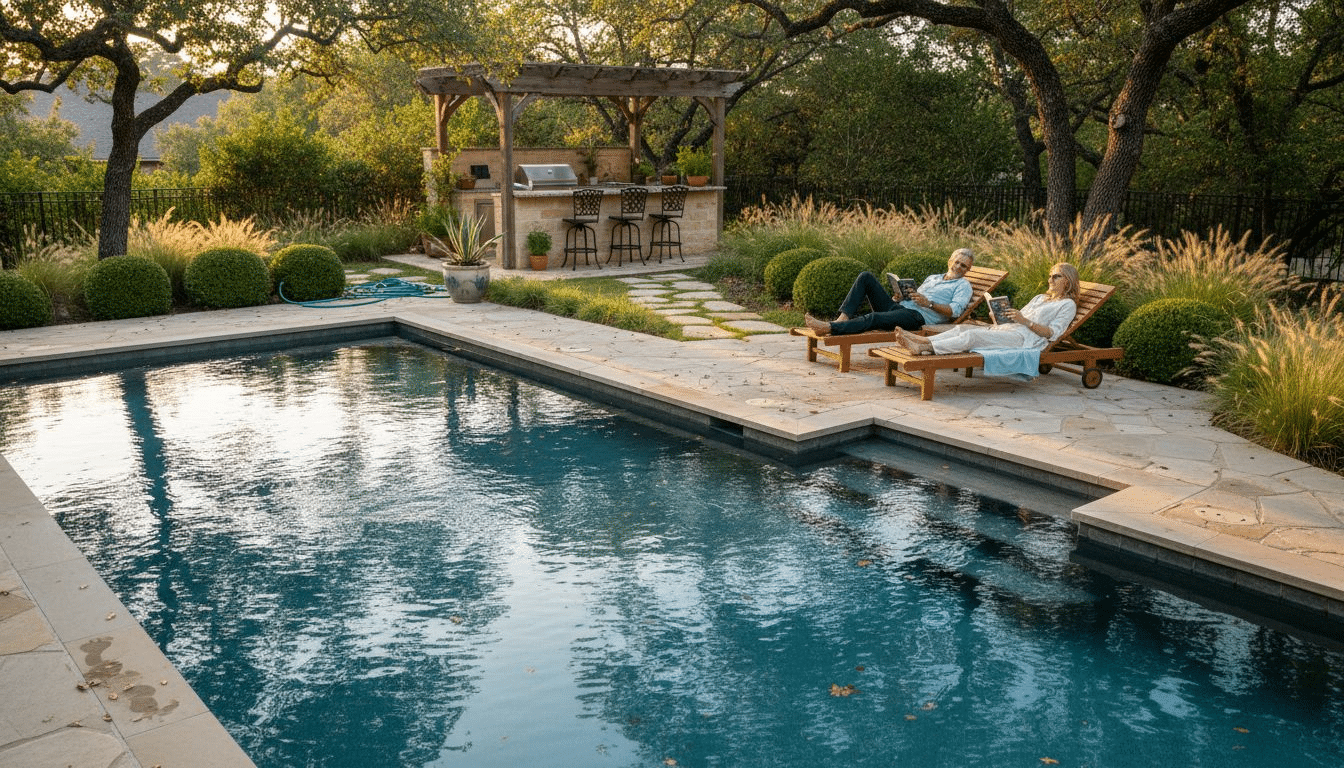
Building a custom pool in Montgomery County brings exciting choices and important decisions about your outdoor space. Pool landscape design combines nature and culture to create beautiful, functional areas where every element works together. When planning an upscale pool, thoughtful landscape design makes all the difference in blending style with practical features. Discover how strategic plant selection, water-smart solutions, and professional guidance can transform your pool into a stunning oasis tailored for Texas living.
Table of Contents
- Defining Landscape Design For Pools
- Popular Poolside Landscaping Styles And Features
- How Landscape Design Impacts Pool Functionality
- Safety, Maintenance, And Local Texas Codes
- Common Mistakes In Pool Landscape Integration
Key Takeaways
| Point | Details |
|---|---|
| Holistic Landscape Design | Effective pool landscape design requires a balance of aesthetics and functionality, considering local climate, drainage, and plant compatibility. |
| Safety and Compliance | Homeowners must adhere to local safety standards, including fencing, chemical management, and emergency access to ensure a safe pool environment. |
| Common Mistakes to Avoid | Erroneous plant selection and improper drainage planning can lead to costly issues; consulting professionals is crucial to avoid these pitfalls. |
| Professional Consultation | Engaging with landscape professionals familiar with the area’s conditions helps create sustainable, customized outdoor living spaces. |
Defining Landscape Design for Pools
Landscape design represents a sophisticated art form that transforms outdoor spaces into functional and aesthetically pleasing environments. In the context of swimming pools, this discipline goes far beyond mere plant placement, integrating complex considerations of form, function, and environmental harmony.
At its core, landscape design combines nature and culture to create cohesive outdoor living spaces that seamlessly connect architectural elements with natural surroundings. For pool environments, this means carefully orchestrating hardscape and softscape components to enhance both visual appeal and practical usability.
Key elements of effective pool landscape design include:
- Climate considerations: Selecting plants and materials that thrive in Montgomery County’s specific environmental conditions
- Topographical analysis: Understanding ground elevation, drainage patterns, and soil composition
- Safety integration: Designing spaces that provide visual appeal while maintaining clear sightlines and secure boundaries
- Water conservation strategies: Implementing xeriscaping techniques to optimize irrigation and minimize water usage
Successful pool landscape design requires a holistic approach that balances aesthetic preferences with functional requirements. Homeowners must consider how different design elements interact – from pool shape and decking materials to plant selections and lighting schemes.
Pro tip: Consult with professional landscape designers who understand Montgomery County’s unique environmental characteristics to create a truly customized outdoor living space.
Popular Poolside Landscaping Styles and Features
Poolside landscaping represents a dynamic fusion of aesthetic design and practical functionality, transforming ordinary outdoor spaces into extraordinary retreats. In Montgomery County, homeowners seek landscape styles that not only complement their swimming pools but also create inviting, low-maintenance environments that withstand local climate challenges.
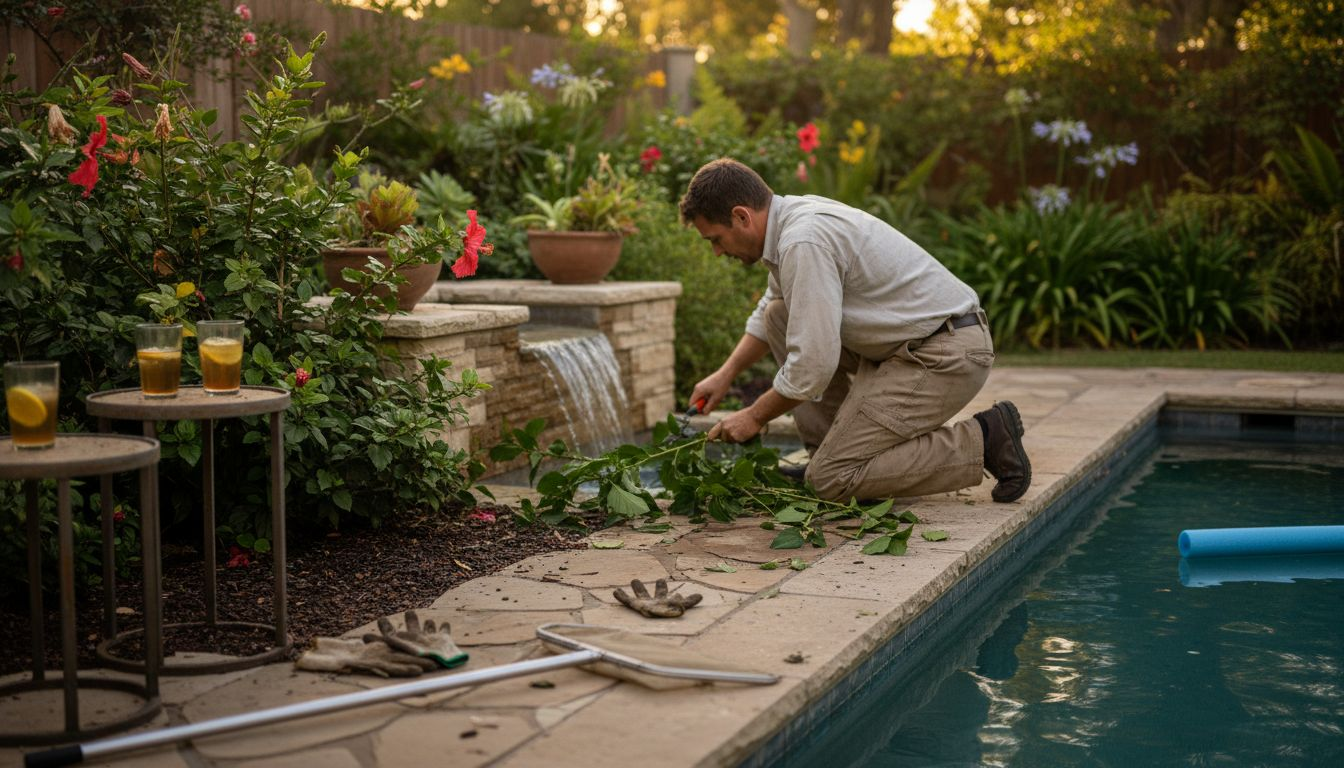
Modern poolside landscaping focuses on water-smart plant selection and strategic design that balances visual appeal with environmental sustainability. This approach involves carefully curating plant collections that thrive in specific microclimates while providing aesthetic value, privacy, and practical benefits.
Popular poolside landscaping styles include:
- Resort-Inspired Tropical: Featuring lush palms, broad-leafed plants, and dramatic architectural elements
- Modern Minimalist: Emphasizing clean lines, geometric shapes, and strategic plant placement
- Native Texan: Incorporating indigenous plants that naturally resist heat and require minimal irrigation
- Desert Contemporary: Utilizing succulents, ornamental grasses, and rock formations
Key considerations for successful poolside landscaping involve selecting plants tolerant to chlorine and heat while maintaining visual harmony. Homeowners should prioritize plants that can withstand reflected heat, varying moisture conditions, and provide natural privacy screening.
Pro tip: Consult local landscape professionals who understand Montgomery County’s unique environmental conditions to create a poolside landscape that is both beautiful and sustainable.
Here’s a comparison of popular poolside landscaping styles and their main characteristics:
| Style | Visual Appeal | Maintenance Level | Climate Adaptability |
|---|---|---|---|
| Resort-Inspired Tropical | Lush foliage, vibrant colors | Moderate to high | Sensitive to cold, needs shelter |
| Modern Minimalist | Clean lines, open spaces | Low | Works well in various climates |
| Native Texan | Natural textures, muted tones | Very low | Excellent for local area |
| Desert Contemporary | Succulents, rocks, grasses | Very low | Ideal for hot, dry environments |
How Landscape Design Impacts Pool Functionality
Landscape design goes far beyond aesthetic appeal, directly influencing the functional performance and overall usability of swimming pool environments. In Montgomery County, homeowners are increasingly recognizing that strategic landscape planning can dramatically enhance pool functionality, creating more efficient, sustainable, and enjoyable outdoor living spaces.
Landscape performance metrics demonstrate multiple ways design impacts pool utility, including improved drainage, energy efficiency, and environmental sustainability. The integration of thoughtful landscape elements transforms pools from standalone features into comprehensive outdoor ecosystem solutions.
Key functional impacts of landscape design include:
- Drainage Management: Preventing water accumulation and potential structural damage
- Microclimate Control: Creating shade, managing wind patterns, and regulating temperature
- Safety Enhancement: Designing clear sightlines, integrating non-slip surfaces, and establishing natural barriers
- Environmental Optimization: Supporting ecological processes around pool environments
Successful landscape design considers complex interactions between natural elements and constructed spaces. Homeowners must balance aesthetic preferences with practical considerations like maintenance requirements, local climate conditions, and long-term sustainability goals.
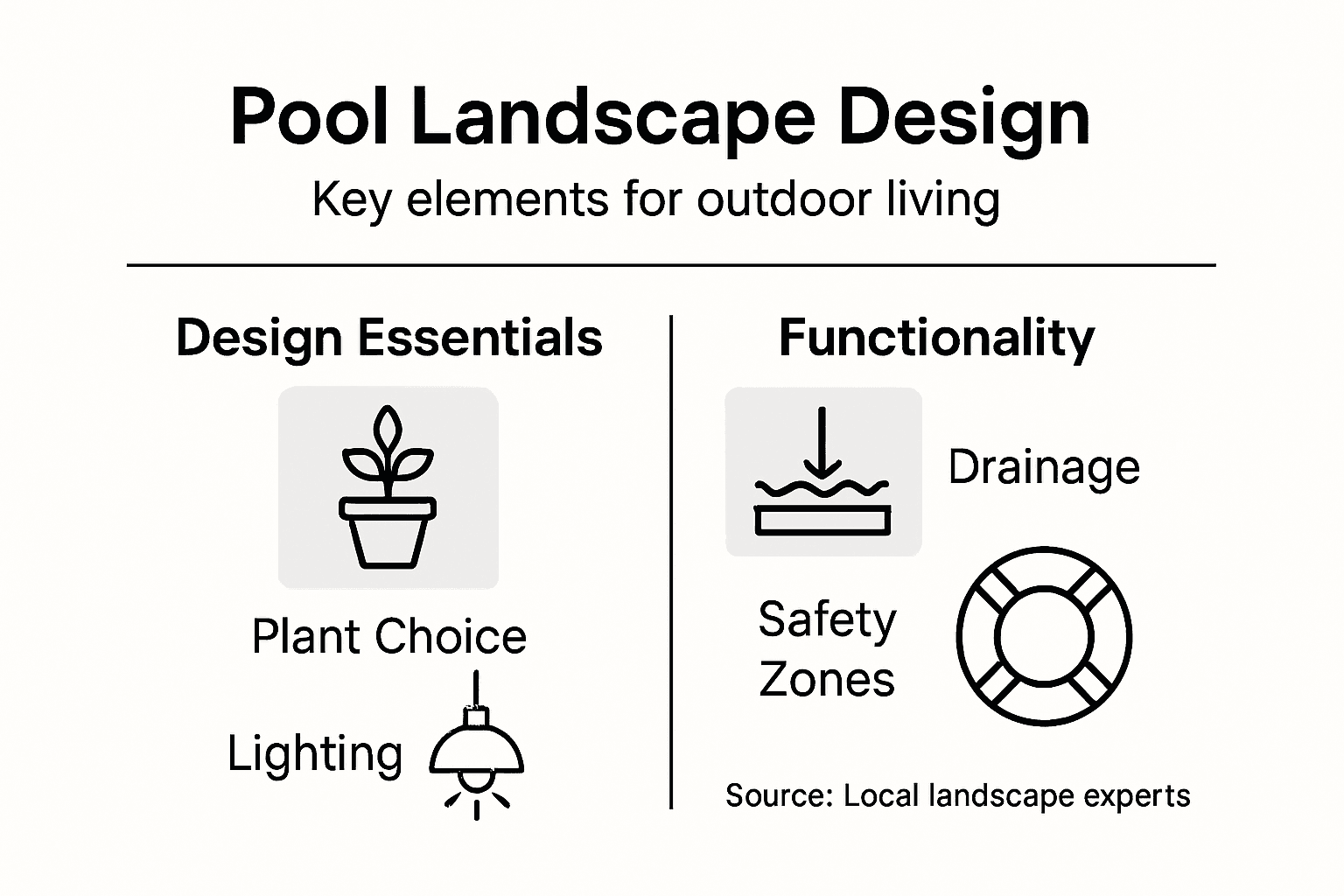
Pro tip: Work with landscape professionals who can provide comprehensive analysis of your specific outdoor environment to maximize pool functionality through intelligent design strategies.
This table summarizes how thoughtful landscape design can impact key aspects of pool functionality:
| Functional Area | Landscape Design Benefit | Result for Homeowners |
|---|---|---|
| Drainage | Improved grading and water routes | Reduced flood risk and damage |
| Microclimate | Strategic planting for shade/wind | More comfortable pool area |
| Safety | Non-slip decking, clear visibility | Lower accident and injury risk |
| Environmental Care | Native plants and smart irrigation | Lower utility bills, sustainability |
Safety, Maintenance, and Local Texas Codes
Pool landscape design in Montgomery County demands meticulous attention to safety protocols, maintenance requirements, and strict adherence to local Texas regulations. Homeowners must navigate a complex landscape of legal and environmental standards to create functional and compliant outdoor living spaces.
Pool safety practices require comprehensive planning that extends beyond simple aesthetic considerations. This involves implementing strategic design elements that minimize risks and protect residents from potential hazards associated with swimming pool environments.
Critical safety and compliance considerations include:
- Fencing Requirements: Ensuring proper barrier heights and secure access points
- Chemical Management: Maintaining appropriate water treatment and testing protocols
- Landscape Zoning: Complying with Texas occupational safety standards for pool and landscape installations
- Emergency Access: Creating clear pathways and visibility around pool areas
- Drainage Design: Preventing water accumulation and potential structural damage
Successful pool landscapes balance aesthetic appeal with rigorous safety standards, requiring homeowners to work closely with licensed professionals who understand local regulatory environments. Professional guidance ensures that design choices meet both visual expectations and strict municipal requirements.
Pro tip: Consult with local pool and landscape professionals who specialize in Montgomery County regulations to ensure your outdoor living space meets all safety and legal standards.
Common Mistakes in Pool Landscape Integration
Landscape integration around swimming pools represents a nuanced design challenge that demands careful planning and strategic execution. Homeowners in Montgomery County frequently encounter significant pitfalls that can compromise both the aesthetic appeal and functional performance of their outdoor living spaces.
Water-smart landscape design requires comprehensive evaluation of site conditions, plant selections, and maintenance strategies. Understanding common mistakes helps prevent costly redesigns and ensures a harmonious, efficient pool environment.
Frequent landscape integration errors include:
- Plant Selection Failures: Choosing vegetation incompatible with pool chemistry and local climate
- Drainage Miscalculations: Improper grading that leads to water accumulation and potential structural damage
- Electrical Safety Oversights: Neglecting proper equipment grounding and bonding near pool installations
- Irrigation Inefficiencies: Overwatering or using inappropriate watering techniques
- Material Incompatibility: Using landscaping materials that deteriorate quickly in wet environments
Successful pool landscape integration demands a holistic approach that balances aesthetic preferences with practical considerations. Homeowners must carefully consider how each design element interacts with the broader outdoor environment, prioritizing both visual appeal and long-term functionality.
Pro tip: Consult with professional landscape designers who specialize in pool environments to create a cohesive, sustainable outdoor living space that avoids common integration mistakes.
Transform Your Pool Landscape Into a Functional Outdoor Sanctuary
The article highlights the challenges homeowners face when integrating landscape design with pool functionality, such as selecting climate-appropriate plants, managing drainage, ensuring safety compliance, and creating a visually appealing outdoor space. If you want to avoid common mistakes like poor plant choices or drainage issues while enhancing your poolside environment with expert knowledge and local Texas code expertise, Bliss Pools is your trusted partner. With over 15 years of experience serving Montgomery County and surrounding areas, we specialize in custom pool construction and outdoor living solutions that blend seamless design with practical benefits.
Ready to enhance your backyard with a professionally designed pool and landscaping features that boost safety, sustainability, and beauty? Contact Bliss Pools today to get a free estimate and begin turning your vision into reality. Explore our full range of services and learn how we bring resort-style outdoor living to Texas homeowners at Bliss Pools. Don’t wait to create the perfect harmony between your pool and landscape for an outdoor retreat you will treasure year-round.
Frequently Asked Questions
What is landscape design for pools?
Landscape design for pools involves creating aesthetically pleasing and functional outdoor spaces around swimming pools. It integrates elements such as plant selection, hardscape materials, drainage solutions, and safety features to enhance the overall pool environment.
How does landscape design impact the functionality of a pool area?
Effective landscape design influences pool functionality by improving drainage, controlling microclimates, enhancing safety, and optimizing environmental conditions, which collectively contribute to a more enjoyable and sustainable outdoor living space.
What are common mistakes to avoid in pool landscape design?
Common mistakes include selecting incompatible plants, miscalculating drainage needs, neglecting electrical safety protocols, and choosing materials unsuitable for wet conditions. Avoiding these pitfalls ensures a more cohesive and functional pool landscape.
How can I ensure my pool landscape design is safe and compliant?
To ensure safety and compliance, it’s essential to adhere to local fencing and zoning regulations, implement proper chemical management practices, create clear pathways, and consult with licensed professionals who have expertise in pool landscape design.