
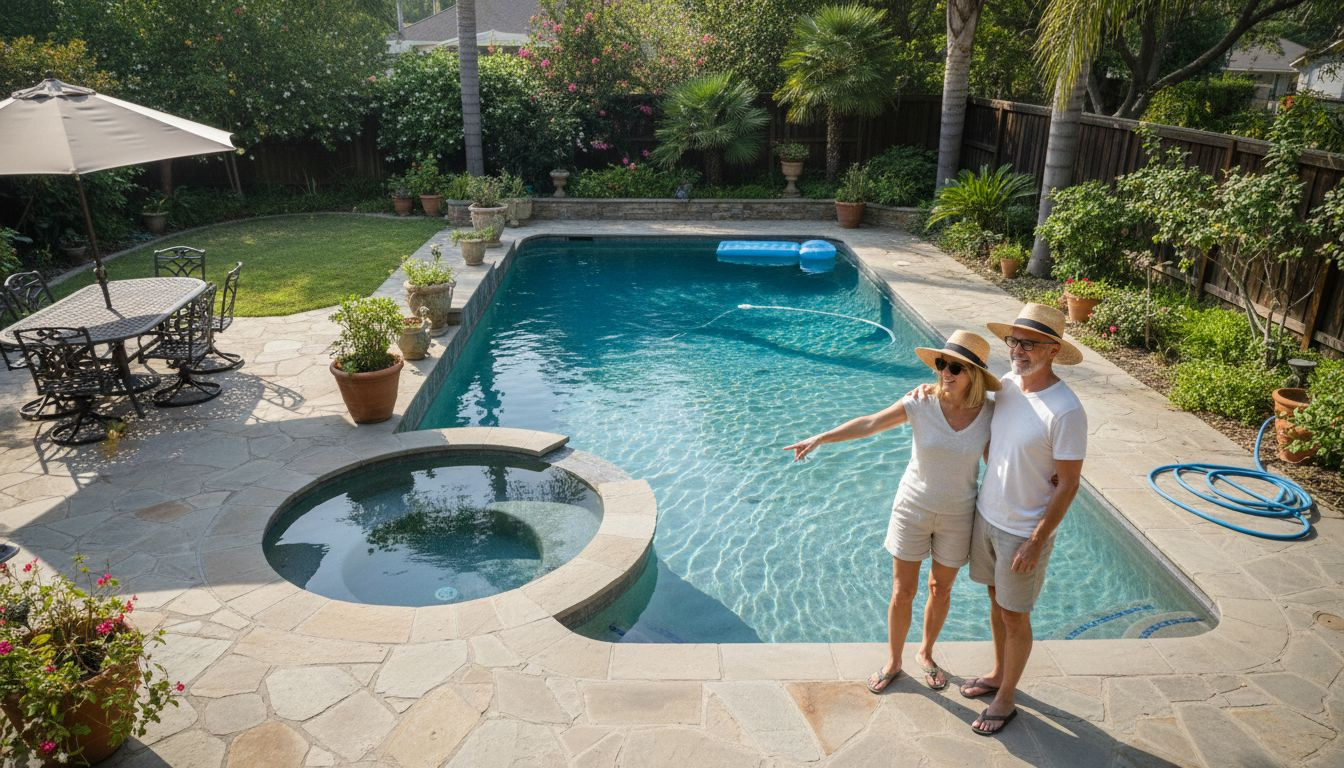
Finding the right pool features can feel overwhelming when you want your Montgomery County backyard to stand out. Homeowners today want more than just a basic pool—they are searching for a customized oasis that blends comfort, style, and efficient use of outdoor space. By focusing on a thoughtful site survey and matching features to your personal lifestyle, you can transform your outdoor area into a private retreat that truly reflects your preferences and needs.
Table of Contents
- Step 1: Assess Your Backyard Space
- Step 2: Identify Your Lifestyle And Needs
- Step 3: Explore Premium Pool Feature Options
- Step 4: Finalize Selections For Optimal Enjoyment
- Step 5: Verify Quality And Compatibility
Quick Summary
| Key Insight | Explanation |
|---|---|
| 1. Assess Your Backyard Space | Conduct a detailed survey to understand key dimensions and unique features of your yard before designing your pool. |
| 2. Identify Lifestyle Needs | Consider how you plan to use your pool to guide your choices for size, shape, and features that fit your family’s lifestyle. |
| 3. Explore Premium Features | Invest in sophisticated pool features like waterfalls or smart technology to enhance functionality and aesthetics. |
| 4. Finalize Selections Carefully | Evaluate structural compatibility, budget alignment, and maintenance needs to ensure your pool design meets both desires and practicality. |
| 5. Verify Quality and Compliance | Perform thorough checks on materials and professional standards to assure long-term durability and compliance with codes. |
Step 1: Assess your backyard space
Selecting the perfect pool features starts with a comprehensive evaluation of your outdoor landscape. Understanding your backyard’s unique characteristics is crucial for creating a custom oasis that seamlessly blends functionality and aesthetic appeal.
Begin by conducting a detailed site survey that captures your yard’s critical dimensions and characteristics. Landscape design involves purposeful planning to maximize human enjoyment while minimizing environmental impact. Key aspects to measure and analyze include:
- Total available square footage
- Ground terrain and slope
- Existing vegetation and landscape features
- Sun exposure throughout the day
- Proximity to property lines and structures
- Underground utility locations
Carefully map out these elements to understand how pool placement will interact with your current landscape. Consider natural elements like rock formations, mature trees, and existing hardscaping that could influence pool design. Your goal is to create an integrated outdoor living space that feels organic and intentional.
A well-planned backyard pool transforms an ordinary outdoor area into a personal retreat that reflects your lifestyle and aesthetic preferences.
Your site assessment should also evaluate practical considerations such as privacy, wind patterns, and potential future landscaping plans. By thoroughly understanding your space’s unique attributes, you’ll be positioned to make informed decisions about pool size, shape, and complementary features.
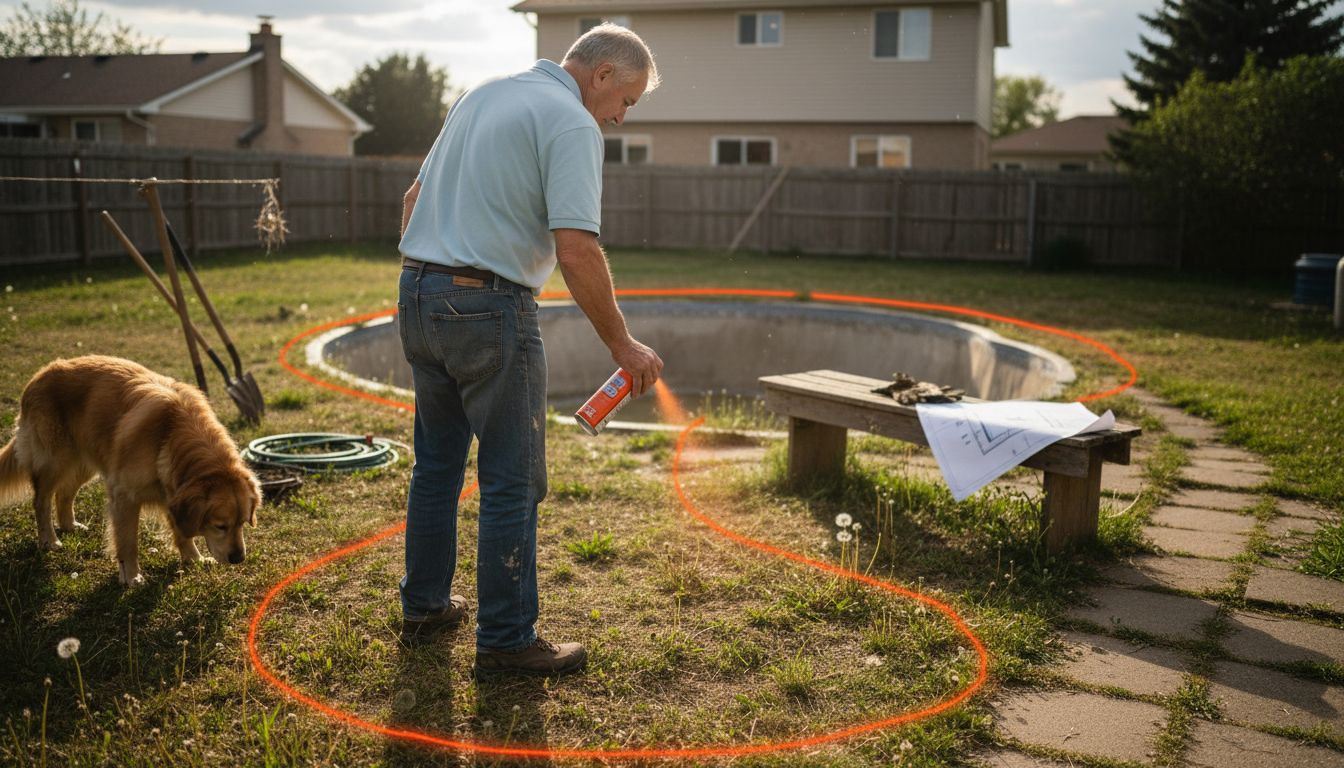
Pro tip: Use landscape marking spray or temporary flags to visualize potential pool footprints and walkways before making final design commitments.
Step 2: Identify your lifestyle and needs
Choosing the right pool goes far beyond dimensions and design—it’s about creating a space that perfectly matches your unique lifestyle and personal preferences. Your backyard pool should be a personalized sanctuary that supports your daily activities, family dynamics, and recreational interests.
Swimming pool design requires understanding user needs and programming the space to accommodate specific activities. Consider how you plan to use your pool by evaluating these potential lifestyle functions:
- Fitness and exercise
- Family recreation and entertainment
- Relaxation and therapeutic purposes
- Social gatherings and poolside entertainment
- Lap swimming and athletic training
- Children’s play and water activities
Think critically about your household’s specific requirements. Are you a fitness enthusiast seeking a lap pool? A parent wanting a safe play area for children? Or someone who loves hosting weekend barbecues with a resort-style pool environment? Each lifestyle scenario demands a different pool configuration and feature set.
A well-designed pool reflects your personal rhythm, transforming from a simple water feature into an extension of your living space.
Beyond immediate needs, consider long-term perspectives. If you have young children now, your pool might need different features compared to a household with teenagers or empty nesters. Factor in potential future changes like family growth, aging requirements, or shifting recreational preferences.
Here’s a summary of how common pool features align with different user lifestyles:
| Lifestyle | Ideal Pool Features | Primary Benefit |
|---|---|---|
| Fitness + Exercise | Lap lanes, resistance jets | Supports daily workout routines |
| Family Recreation | Shallow play zones, integrated steps | Safe and inclusive for all ages |
| Entertaining Guests | Swim-up bar, spacious decking | Enhances social gatherings |
| Relaxation/Therapy | Spa section, temperature control | Promotes stress relief and comfort |
| Children’s Play | Water slides, safety ledges | Provides fun with added safety |
Pro tip: Create a detailed wishlist of pool features and rank them by priority to help your pool designer understand your vision.
Step 3: Explore premium pool feature options
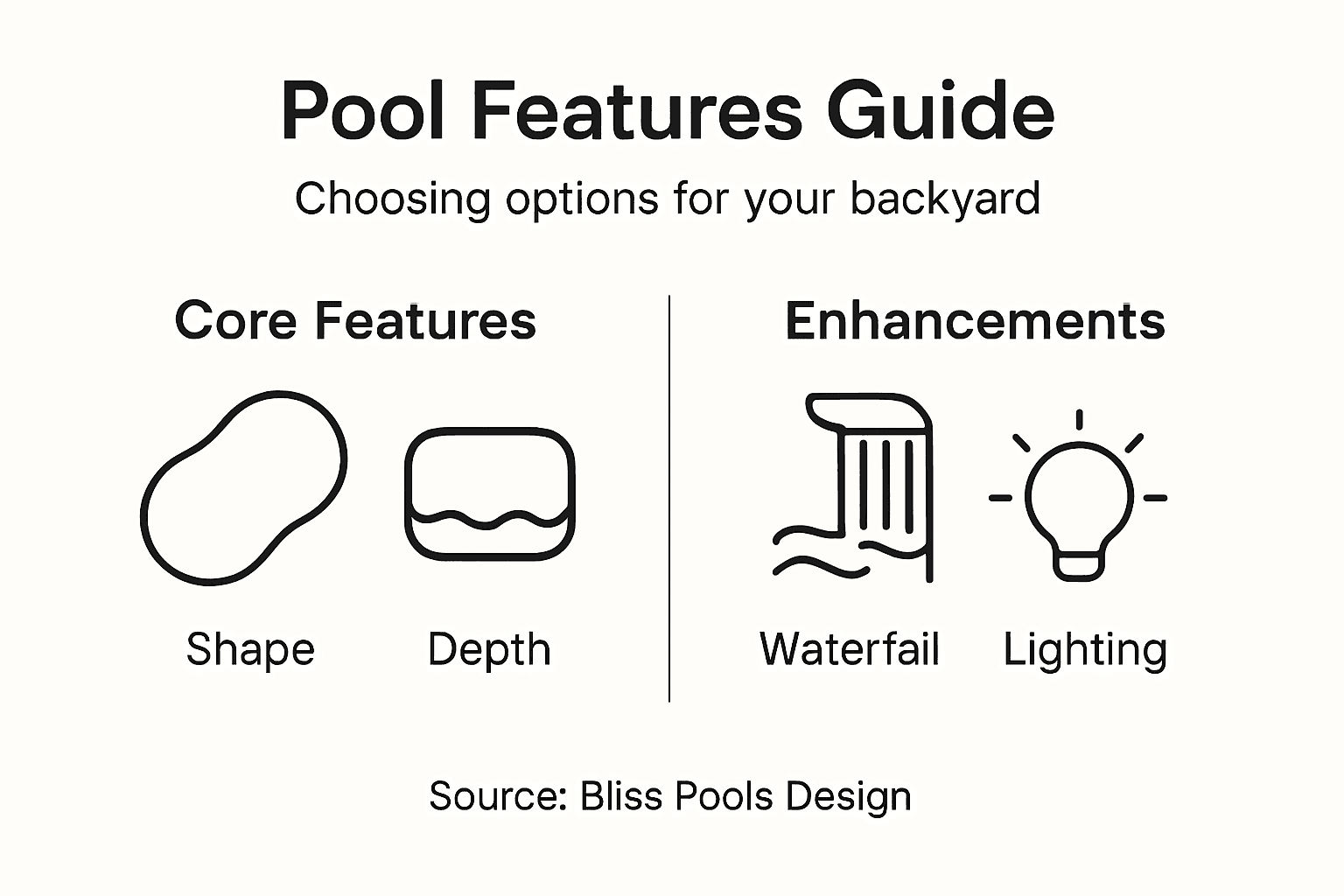
Transforming your backyard into a luxurious retreat requires carefully selecting pool features that elevate both functionality and aesthetic appeal. Swimming pool design involves strategic feature selection that goes beyond basic water installation.
Premium pool features can dramatically enhance your outdoor living experience. Consider these sophisticated options:
-
Water Features
- Cascading waterfalls
- Elegant fountains
- Infinity edges
- Underwater lighting systems
-
Comfort and Convenience
- Built-in seating areas
- Temperature-controlled zones
- Swim-up bars
- Integrated spa sections
-
Technology and Efficiency
- Automated cleaning systems
- Smart temperature controls
- Energy-efficient pumps
- Solar heating options
Each feature represents an opportunity to customize your pool to your specific lifestyle and aesthetic preferences. Some options provide practical benefits like improved maintenance, while others create stunning visual experiences that transform your backyard into a personal resort.
A thoughtfully designed pool is more than a water feature—it’s an extension of your home’s personality and your personal style.
Consider how different features align with your initial lifestyle assessment. A fitness enthusiast might prioritize lap lanes and resistance jets, while someone who loves entertaining might focus on expansive decking and integrated seating areas.
Pro tip: Request detailed renderings of potential feature combinations to visualize how they will look in your specific backyard space.
Step 4: Finalize selections for optimal enjoyment
The culmination of your pool design journey requires careful consideration and strategic decision-making to ensure your vision becomes a reality. Pool design demands comprehensive feature verification that balances aesthetic desires with practical functionality.
To finalize your pool selections effectively, focus on these critical evaluation criteria:
-
Structural Compatibility
- Verify ground support capabilities
- Assess drainage requirements
- Confirm zoning and permit regulations
- Evaluate site-specific installation challenges
-
Budget Alignment
- Compare feature costs
- Prioritize must-have versus nice-to-have elements
- Calculate long-term maintenance expenses
- Plan for potential future upgrades
-
Performance Considerations
- Energy efficiency ratings
- Maintenance complexity
- Durability of selected materials
- Compatibility with existing landscape
Carefully weigh each feature’s impact on your overall pool experience. Some premium additions might seem attractive initially but could become maintenance headaches or strain your budget over time. Thoughtful selection means finding the perfect balance between aspiration and practicality.
Before committing to your pool design, compare these crucial considerations:
| Criterion | What to Evaluate | Why It Matters |
|---|---|---|
| Budget Alignment | Initial cost, future expenses | Prevents overspending and regrets |
| Structural Compatibility | Soil support, permits | Avoids installation obstacles |
| Maintenance Needs | Cleaning systems, complexity | Ensures easy long-term care |
| Performance/Durability | Energy efficiency, materials | Extends pool’s lifespan and value |
Your final pool design should seamlessly integrate functionality, aesthetics, and personal lifestyle needs.
Consult with professional pool designers who can provide expert insights into how your selected features will perform in your specific environment. Their technical expertise can help you avoid potential pitfalls and optimize your investment.
Pro tip: Request detailed cost-benefit analysis for each proposed feature to understand its long-term value and impact.
Step 5: Verify quality and compatibility
Ensuring the highest standards of pool construction requires meticulous examination of materials, techniques, and professional compliance. Pool construction demands rigorous quality assurance to guarantee long-term durability and performance.
Critical verification steps include:
-
Material Quality Checks
- Inspect concrete or shotcrete composition
- Verify waterproofing membrane integrity
- Test finish durability and resistance
- Examine joint and seal quality
-
Technical Compatibility
- Confirm component interconnectivity
- Validate electrical and plumbing systems
- Assess equipment manufacturer specifications
- Review load-bearing structural requirements
-
Professional Standards
- Verify contractor certifications
- Check compliance with local building codes
- Ensure ANSI/APSP industry standards are met
- Review warranty and installation documentation
Penetration points like lighting fixtures, plumbing connections, and filtration systems demand special attention. These areas are potential weak spots that can compromise your pool’s structural integrity if not properly sealed and integrated.
Quality is not an act, but a habit that separates exceptional pool construction from merely adequate installations.
Professional pool designers and contractors should provide comprehensive documentation demonstrating how each selected feature meets industry standards and performs under various environmental conditions.
Pro tip: Request detailed material testing reports and third-party certification documentation to validate the quality of your pool’s components.
Create Your Perfect Backyard Oasis with Bliss Pools
Choosing the ideal pool features can feel overwhelming when faced with assessing space, aligning your lifestyle, exploring luxurious options, and ensuring quality. If you want to avoid costly mistakes and transform your outdoor area into a seamless retreat that fits your unique needs and budget, you need expert guidance. Key challenges like structural compatibility, feature prioritization, and quality assurance require trusted professionals who understand how to blend creativity and functionality.
At Bliss Pools, we specialize in customizing every detail of your pool build so it reflects your vision and lifestyle. With over 15 years of experience serving Montgomery County, TX, Waller County, TX, and Northern Harris County, TX, we combine expert design with premium materials and innovative features tailored for your backyard. Whether you desire elegant water features, relaxing spas, or energy-efficient technology, our team crafts exquisite outdoor living spaces with a customer-centric approach and unwavering commitment to quality and safety.
Make your dream pool a reality today.
Ready to bring your personalized backyard retreat to life? Visit Bliss Pools now to explore our custom pool construction services and get your free estimate. Discover how our expert team can help you assess your space, select the perfect features, and ensure lasting quality so you enjoy your outdoor oasis for years to come. Don’t wait to begin your journey toward a stunning, functional, and truly custom pool experience.
Frequently Asked Questions
How do I assess my backyard space for pool features?
Begin by conducting a detailed site survey that measures critical elements such as total square footage, terrain, existing vegetation, and sun exposure. Map these features to understand how they will influence pool placement and design.
What lifestyle needs should I consider when choosing pool features?
Identify how you intend to use your pool by evaluating activities such as fitness, family recreation, relaxation, and social gatherings. Create a list of essential features that match your lifestyle, like lap lanes for fitness enthusiasts or shallow areas for children’s play.
What premium pool features can enhance my backyard oasis?
Consider adding luxurious enhancements such as waterfalls, swim-up bars, and integrated spa sections. Choose features that not only boost relaxation and enjoyment but also align with your specific needs and aesthetic preferences.
How can I finalize selections for my pool design?
Evaluate structural compatibility, budget alignment, and maintenance needs to make informed decisions about features. Prioritize must-have elements over nice-to-have options to ensure a satisfying and sustainable investment.
How do I verify the quality of my pool construction materials?
Inspect materials for durability, including the composition of concrete and the integrity of waterproofing membranes. Request detailed quality assurance documentation from your contractor to ensure all components meet industry standards.
What steps should I take before the installation of my pool?
Before installation, confirm that all designs comply with local building codes, verify contractor certifications, and ensure that selected features are compatible with your backyard’s specific attributes. This plan will help prevent potential installation challenges down the road.