

Over 10 million American homes now feature a backyard pool, transforming ordinary lawns into personal retreats of leisure and fun. For many families, designing the perfect swimming space is both an exciting goal and a complex challenge. Understanding how to assess your backyard, set a realistic budget, choose features, and manage construction quality will help you create a beautiful pool tailored to your unique American lifestyle.
Table of Contents
- Step 1: Assess Your Backyard Space and Needs
- Step 2: Establish Budget and Design Preferences
- Step 3: Select Features, Materials, and Amenities
- Step 4: Obtain Permits and Hire a Pool Builder
- Step 5: Verify Construction Quality and Finalize Details
Quick Summary
| Key Insight | Explanation |
|---|---|
| 1. Measure Your Backyard Space | Assess dimensions and potential pool locations to maximize usability and comply with zoning regulations before beginning your design. |
| 2. Establish a Realistic Budget | Set a budget that encompasses construction and maintenance costs while exploring cost-effective materials and designs for your pool. |
| 3. Choose Appropriate Features and Materials | Select durable and functional pool features, materials, and safety features to enhance usability and ensure longevity. |
| 4. Obtain Necessary Permits | Research local regulations and secure required permits to ensure your pool construction meets all building codes and safety requirements. |
| 5. Inspect and Verify Construction Quality | Conduct thorough final inspections to ensure safety features are in place and the pool functions correctly before use. |
Step 1: Assess Your Backyard Space and Needs
Creating your dream backyard pool begins with a strategic assessment of your available outdoor space. This critical first step determines everything from pool size and shape to potential placement and surrounding landscape design. Understanding your backyard’s unique characteristics will help you transform an ordinary outdoor area into a stunning aquatic retreat.
Start by measuring your entire backyard footprint and identifying potential pool locations. Careful evaluation of dimensions and property lines allows you to maximize usable space while ensuring compliance with local zoning regulations. Consider factors like sunlight exposure, existing landscaping, and natural terrain. Look for areas with maximum sun coverage and minimal obstructions like trees or underground utility lines. Pay special attention to your property boundaries and setback requirements which dictate how close you can construct a pool to property lines.
Your backyard layout will significantly influence pool design. Rectangular yards offer straightforward placement options, while irregularly shaped spaces might require creative positioning. Strategic pool placement near existing structures can enhance privacy and create a more intimate outdoor environment. Consider potential sight lines from neighboring properties and use existing fencing or landscaping to create natural screening.
Pro tip: Use landscape marking spray or garden hoses to outline potential pool dimensions directly on your lawn. This visual approach helps you physically understand how the pool will fit and interact with your existing outdoor space before making any permanent decisions.
Step 2: Establish Budget and Design Preferences
Designing your dream backyard pool requires careful financial planning and aesthetic consideration. This crucial step helps you align your vision with realistic expectations, ensuring you create a pool that not only looks stunning but also fits comfortably within your budget.
Cost-effective pool designs can help manage expenses without compromising visual appeal. Start by establishing a clear budget range that includes not just pool construction but also ongoing maintenance costs. Consider simpler geometric shapes like rectangles or squares which tend to be less expensive than complex custom designs. Standard materials such as basic concrete or fiberglass can significantly reduce overall project costs while maintaining durability and aesthetic quality.
Obtaining multiple contractor bids is an essential strategy for managing pool construction expenses. Research different pool types concrete, vinyl, and fiberglass and understand their price points. Each material offers unique benefits some provide longer longevity while others present more affordable upfront costs. Consider your long-term goals and balance initial investment with potential maintenance expenses. Think about additional features like lighting, heating systems, or decorative elements that might impact your total budget.
Here is a comparison of common backyard pool construction materials and their core advantages:
| Material Type | Durability | Upfront Cost | Maintenance Needs |
|---|---|---|---|
| Concrete | Highly durable, customizable | Most expensive option | Regular resurfacing required |
| Fiberglass | Long-lasting with smooth surface | Moderate pricing | Low upkeep, simple cleaning |
| Vinyl Liner | Flexible shapes, smooth feel | Lower initial cost | Liner replacement every decade |
Pro tip: Create a detailed spreadsheet tracking potential pool costs, including installation, materials, landscaping, and anticipated annual maintenance. This comprehensive approach helps prevent unexpected financial surprises and ensures your dream pool remains within realistic financial boundaries.
Step 3: Select Features, Materials, and Amenities
Selecting the right combination of pool features, materials, and amenities transforms an ordinary swimming pool into a personalized backyard retreat. This critical step allows you to customize your pool to match your lifestyle, aesthetic preferences, and functional needs.
Choosing durable and functional design elements can significantly enhance your pool area’s overall usability and visual appeal. Consider non-slip surface materials for safety and prioritize features that provide both aesthetic beauty and practical functionality. Integrating strategic lighting can create dramatic nighttime ambiance while improving visibility and safety. Water features like cascading waterfalls or elegant fountains add visual interest and create a more dynamic swimming environment.
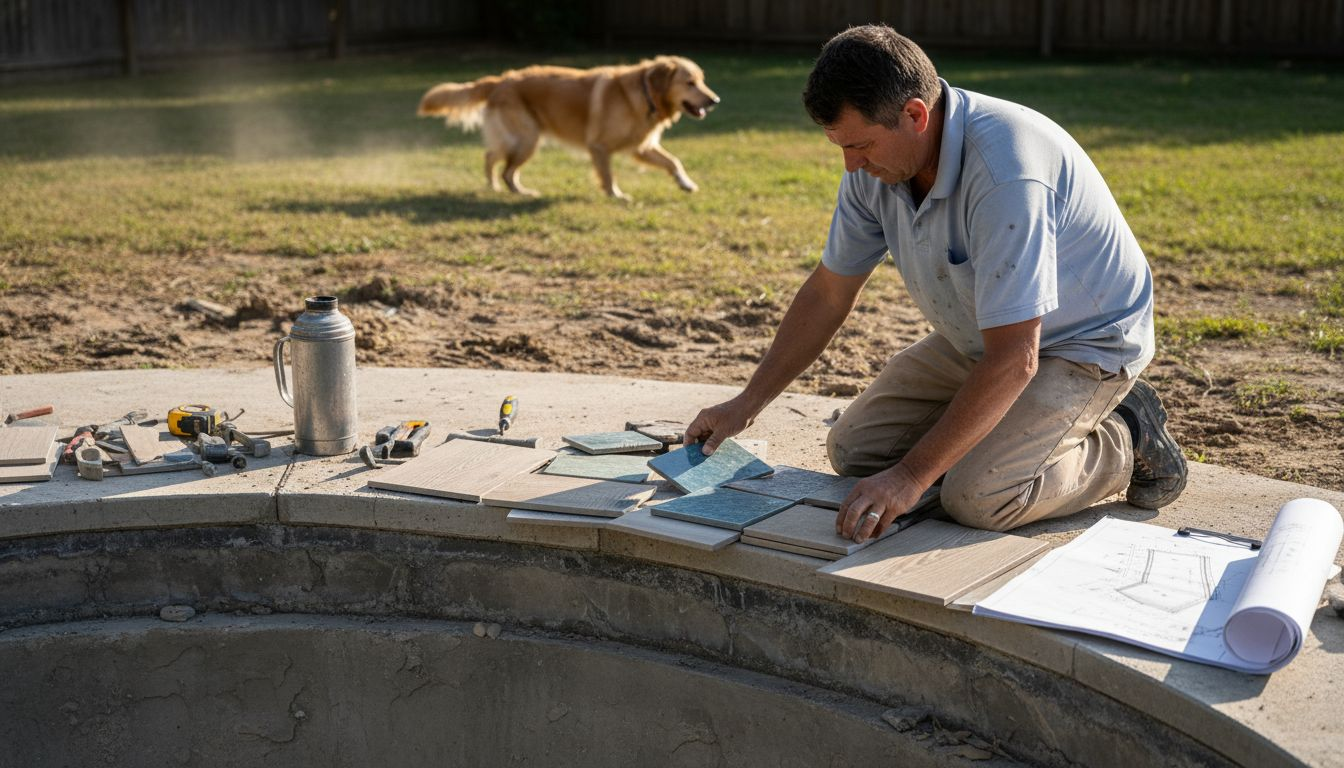
Maximizing pool functionality involves carefully selecting materials and innovative accessories. Explore options like built-in steps, swim-up bars, underwater LED lights, and ergonomic seating areas that can transform your pool from a simple swimming space into a comprehensive entertainment zone. Evaluate different material options such as fiberglass, concrete, or specialized tiles that offer durability, aesthetic appeal, and long-term performance. Consider how each material interacts with your specific climate and maintenance capabilities.
Pro tip: Create a detailed mood board or digital inspiration collection showcasing your preferred pool design elements. This visual planning approach helps communicate your vision clearly to contractors and ensures your final pool design perfectly reflects your personal style and functional requirements.
Step 4: Obtain Permits and Hire a Pool Builder
Navigating the legal and professional aspects of pool construction requires careful planning and strategic decision-making. This crucial phase involves securing necessary municipal approvals and selecting the right professional to bring your backyard pool vision to life.
Begin by researching local building regulations and zoning requirements specific to pool installations. Contact your local municipal offices to understand the exact permits needed for your project. These typically include detailed site plans, structural drawings, and proof of compliance with safety and setback regulations. Prepare documentation that demonstrates your pool will meet all local building codes and environmental guidelines.
To minimize expenses and ensure quality, obtain multiple bids from reputable pool builders. Request comprehensive quotes that break down material costs, labor expenses, and projected timelines. Compare not just pricing but also each contractor’s portfolio, customer reviews, and professional certifications. Custom pool builders in Montgomery County can provide specialized insights into local construction requirements and design possibilities. Verify each contractor’s licensing, insurance, and past project references to ensure they can deliver the high-quality pool you envision.
Pro tip: Create a detailed comparison spreadsheet for potential pool builders, including criteria like pricing, estimated completion time, warranty offerings, and previous client testimonials. This systematic approach helps you make an informed decision beyond just comparing initial cost estimates.
Step 5: Verify Construction Quality and Finalize Details
As your backyard pool project nears completion, careful inspection and final verification become paramount to ensuring a safe, functional, and beautiful swimming environment. This critical stage transforms your pool from a construction project into a fully realized backyard retreat.
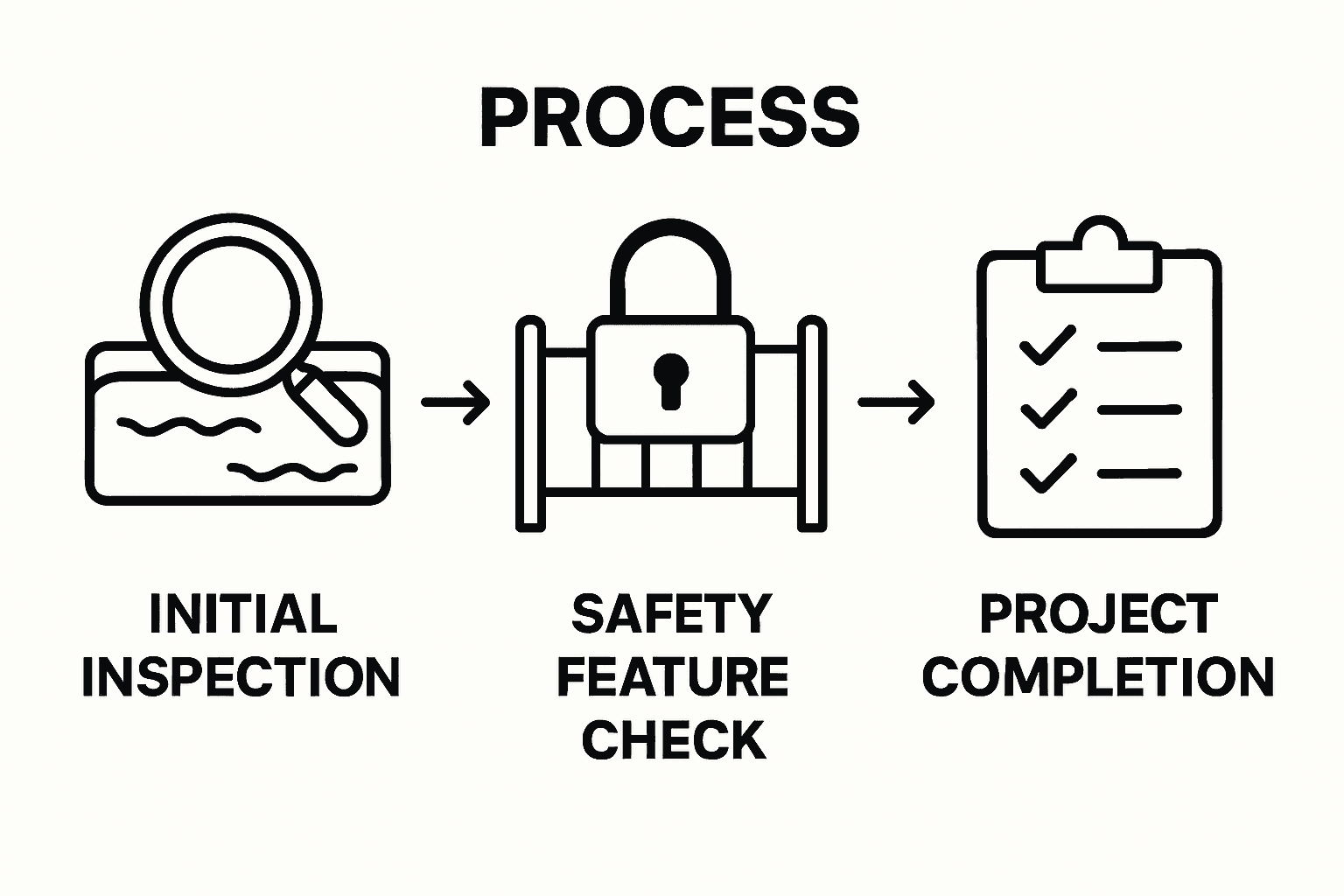
Implementing comprehensive pool safety features is essential during the final construction and verification phase. Conduct a thorough walkthrough with your pool builder to examine every aspect of the construction. Verify that all safety mechanisms are properly installed, including self-closing and self-latching gates, secure fencing, and appropriate non slip surfaces around the pool area. Check that electrical connections meet local building codes, and ensure all equipment like pumps, filters, and lighting systems function correctly.
Develop a comprehensive safety protocol that includes clear pool rules and emergency preparedness. Confirm the placement of safety equipment such as reaching poles, life rings, and first aid kits. Create a visible safety sign with emergency contact numbers and basic pool rules. Review the maintenance requirements with your pool builder, understanding the specific care needed for your pool’s materials and equipment to preserve its quality and extend its lifespan.
Summarized below are essential safety features for new backyard pools and their main functions:
| Safety Feature | Purpose | Impact on Pool Safety |
|---|---|---|
| Self-closing gates | Limit unsupervised access | Reduce risk of child entry |
| Non-slip surfaces | Prevent slips and falls | Lower injury rate around pool |
| Pool alarms | Detect unauthorized entry | Immediate alert for potential hazards |
| Clearly posted rules | Remind of safe pool behavior | Promote responsible pool usage |
Pro tip: Create a dedicated pool maintenance binder that includes all construction documents, warranty information, equipment manuals, and a custom maintenance schedule. This organizational approach will help you track your pool’s long term care and quickly address any potential issues that might arise.
Transform Your Backyard Dreams Into Reality with Bliss Pools
Planning a custom backyard pool can feel overwhelming when balancing space assessments, budget considerations, safety features, and material choices. The challenge lies in turning these decisions into a beautiful, functional oasis that fits your lifestyle while complying with local regulations and maintaining safety. If you are aiming to build a pool that blends perfectly with your outdoor environment and enhances your home���s value Bliss Pools offers expert guidance and personalized solutions to help you every step of the way. With over 15 years of experience serving Montgomery County and the surrounding Texas areas Bliss Pools specializes in creating custom pools designed specifically for your space and vision.
Take the stress out of backyard pool planning by partnering with trusted professionals. Discover how our custom pool construction services incorporate your design preferences and practical needs including durable materials, energy-efficient systems, and stylish amenities like outdoor kitchens or pergolas. Explore our full range of offerings at Bliss Pools and see why homeowners in Montgomery County choose us for quality craftsmanship and attentive customer care. Ready to make your dream pool a reality Get started with a free consultation today and bring your custom oasis to life with Bliss Pools. Visit Bliss Pools now and let us turn your backyard planning into an extraordinary living experience.
Frequently Asked Questions
How do I assess my backyard space for a pool?
Begin by measuring your entire backyard and identifying potential pool locations. Look for areas with maximum sunlight exposure and minimal obstructions, such as trees or underground utilities, to determine where to best place your pool.
What factors should I include in my pool budget?
Factor in not only the construction costs but also ongoing maintenance expenses. Create a spreadsheet to track installation, materials, landscaping, and annual care, to prevent unexpected financial surprises during your project.
What materials are best for building a backyard pool?
Consider durability, maintenance needs, and upfront costs when selecting materials. Common options include concrete, fiberglass, and vinyl, each with unique benefits—choosing simpler designs and standard materials can help manage costs effectively.
How do I find the right pool builder for my project?
Obtain bids from multiple reputable pool builders to compare pricing and services. Evaluate their portfolios, customer reviews, and certifications to ensure you select a builder who aligns with your vision and quality standards.
What safety features should I include in my new pool?
Incorporate essential safety features such as self-closing gates, non-slip surfaces, and pool alarms to enhance safety around your pool area. Also, post clear pool rules to promote responsible use and reduce the risk of accidents.