
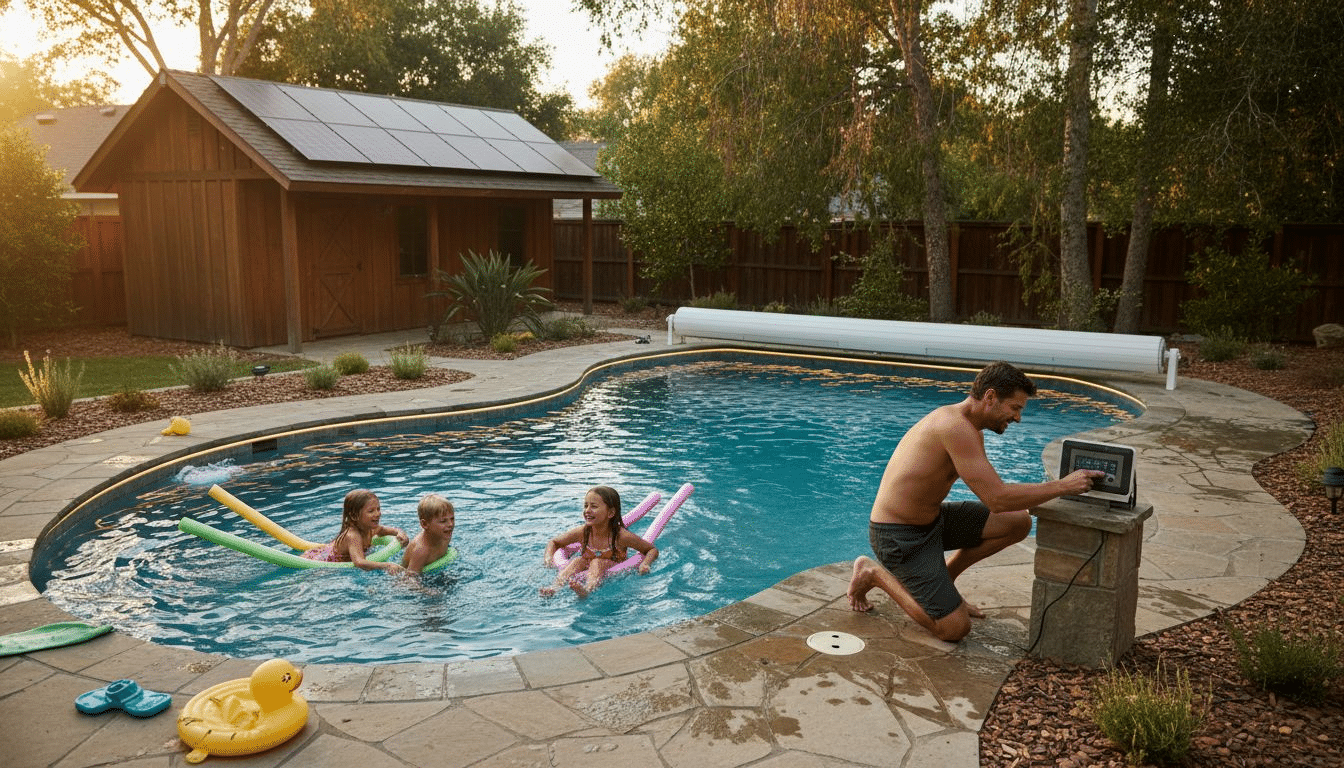
Watching your energy bills climb every pool season can feel frustrating, especially when you’re unsure how to cut costs without sacrificing comfort. Most pool owners want crystal-clear water and a relaxing backyard oasis, but running pumps, heaters, and lights can quickly drain your wallet. You deserve a pool that’s efficient, enjoyable, and doesn’t cost a fortune in electricity.
This article will show you smart, practical upgrades that help you save real money and reduce energy waste. From advanced pool pumps that use variable speed technology to LED lighting that consumes at least 75% less energy than old bulbs, each strategy is designed to make a noticeable difference. Get ready to discover actionable tips and solutions for a more energy-efficient pool setup—so you can enjoy warm, sparkling water all season long without the worry of high utility costs.
Table of Contents
- Upgrade to Variable-Speed Pool Pumps
- Install Energy-Saving LED Pool Lighting
- Use Solar Pool Heating Systems
- Add Automatic Pool Covers to Prevent Heat Loss
- Optimize Pool Pump Timers and Run Times
- Incorporate High-Efficiency Pool Filters
- Landscape for Shade and Wind Protection
Quick Summary
| Takeaway | Explanation |
|---|---|
| 1. Upgrade to Variable-Speed Pumps | Variable-speed pool pumps cut energy use by up to 90%, allowing tailored water circulation. |
| 2. Install Energy-Saving LED Lighting | LED pool lights can save about $225 annually and last 25 times longer than incandescent bulbs. |
| 3. Use Solar Pool Heating Systems | Solar heating reduces energy costs by up to 80% and is eco-friendly, using sunlight for pool warmth. |
| 4. Add Automatic Pool Covers | Automatic covers can reduce heating energy consumption by up to 70% and enhance pool safety while minimizing debris. |
| 5. Landscape for Shade and Wind Protection | Strategic landscaping can create shaded areas that lower cooling costs and increase comfort around the pool. |
1. Upgrade to Variable-Speed Pool Pumps
Variable-speed pool pumps represent a game-changing solution for homeowners seeking to dramatically reduce energy consumption and lower utility bills. These innovative pumps offer a significant improvement over traditional single-speed models by allowing precise control of water circulation rates and energy usage.
Unlike standard pool pumps that run at one constant speed, variable-speed pumps adjust flow dynamically to match your pool’s specific needs. This means they can operate at lower speeds during routine filtration and ramp up only when more intense circulation is required.
Key benefits of variable-speed pool pumps include:
- Up to 90% reduction in energy consumption compared to single-speed models
- Quieter operation due to lower rotational speeds
- Longer equipment lifespan from reduced mechanical strain
- More consistent water filtration and circulation
Most Energy Star certified variable-speed pumps can be programmed with custom speed settings and timer functions. This allows you to optimize energy usage by running the pump at lower speeds during off-peak hours or when minimal circulation is needed.
When selecting a variable-speed pump, homeowners should consider factors like pool size, desired flow rates, and existing plumbing configuration. Professional installation can help ensure maximum efficiency and compatibility with your specific pool system.
Pro tip: Consider installing a pump with a built-in timer to automatically adjust speeds and reduce energy consumption during low-demand periods.
2. Install Energy-Saving LED Pool Lighting
Transforming your pool’s lighting system with LED technology represents a smart strategy for reducing energy consumption and enhancing outdoor aesthetics. Modern LED pool lights offer an impressive combination of efficiency, durability, and visual appeal that traditional lighting simply cannot match.
LED lighting provides substantial energy savings by consuming up to 75% less electricity compared to conventional incandescent bulbs. These advanced lighting solutions not only reduce your energy bill but also deliver superior illumination with remarkable longevity.
Key advantages of LED pool lighting include:
- Dramatically lower electricity usage
- Extended bulb lifespan (up to 25 times longer than traditional bulbs)
- Minimal heat emission
- Wide range of color and brightness options
- Enhanced pool area aesthetics
Homeowners can maximize their energy savings by selecting Energy Star rated LED fixtures and incorporating smart lighting controls. Many modern LED pool lights come with integrated timers, dimmers, and even smartphone app controls that allow precise management of lighting intensity and duration.
LED pool lighting can help homeowners save approximately $225 annually in energy costs.
When selecting LED pool lights, consider factors like color temperature, beam spread, and waterproof ratings. Professional installation ensures optimal positioning and electrical compatibility, helping you achieve both energy efficiency and stunning visual effects.
Pro tip: Install LED lights with motion and daylight sensors to automatically manage your pool lighting and maximize energy savings.
3. Use Solar Pool Heating Systems
Solar pool heating systems represent a cutting-edge solution for environmentally conscious homeowners seeking to reduce energy costs and minimize their carbon footprint. Solar thermal technology offers a renewable approach to maintaining comfortable pool temperatures without relying on traditional fossil fuel-based heating methods.
These innovative systems utilize roof-mounted solar collectors that capture sunlight and transfer heat directly to your pool water. By harnessing the sun’s abundant energy, solar pool heaters can dramatically reduce your energy consumption and operating expenses.
Key benefits of solar pool heating include:
- Up to 80% reduction in pool heating energy costs
- Environmentally friendly heating solution
- Minimal maintenance requirements
- Extended swimming season
- No additional electrical operating costs
Solar thermal collectors work by circulating pool water through specialized panels that absorb solar radiation. As water passes through these collectors, it gets heated naturally before returning to the pool at a warmer temperature. This process continues throughout daylight hours, providing consistent heating without additional energy input.
Solar pool heaters can supply the majority of pool water heating needs while significantly reducing conventional energy consumption.
When considering a solar pool heating system, homeowners should evaluate factors such as roof orientation, local climate, pool size, and initial installation costs. Professional assessment can help determine the most efficient solar configuration for your specific pool requirements.
Pro tip: Combine your solar pool heating system with a pool cover to further minimize heat loss and maximize energy efficiency.
4. Add Automatic Pool Covers to Prevent Heat Loss
Automatic pool covers represent a smart solution for homeowners looking to dramatically reduce energy waste and maintain optimal pool temperatures. Energy efficiency improvements can significantly reduce heat loss through strategic surface protection and insulation.
These innovative covers act as a thermal barrier, preventing heat escape through two primary mechanisms: reducing evaporation and blocking convective heat transfer. When your pool is not in use, an automatic cover creates a tight seal that traps warmth and minimizes energy loss.
Key benefits of automatic pool covers include:
- Reduces pool heating energy consumption by up to 70%
- Prevents water evaporation
- Maintains consistent water temperature
- Reduces chemical loss
- Enhances pool safety
- Minimizes debris accumulation
Modern automatic pool cover systems offer convenient operation through remote controls or smartphone apps. These motorized covers can be deployed quickly with minimal effort, making energy conservation as simple as pressing a button.
An automatic pool cover can save hundreds of dollars annually in heating and maintenance costs.
When selecting an automatic pool cover, consider factors like pool shape, material durability, insulation properties, and compatibility with your existing pool infrastructure. Professional installation ensures optimal performance and energy efficiency.
Pro tip: Choose a dark-colored automatic pool cover to absorb more solar radiation and provide additional passive heating during daytime.
5. Optimize Pool Pump Timers and Run Times
Pool pump timers offer a strategic approach to reducing energy consumption while maintaining optimal water quality. Efficient pump operation can dramatically cut energy use by aligning run times with actual pool maintenance requirements.
Traditional continuous pool pump operation wastes significant electricity. By implementing smart timer strategies, homeowners can reduce energy consumption by up to 75% without compromising water cleanliness.
Key strategies for optimizing pool pump run times include:
- Limit daily pump operation to 6 hours
- Use multiple shorter filtration cycles
- Schedule pump runs during off-peak electricity hours
- Invest in programmable digital timers
- Monitor water quality between cycles
Pump timer technology enables precise control over filtration schedules. Modern digital timers can be programmed to run pumps during specific times of day, ensuring efficient water circulation while minimizing unnecessary energy expenditure.
Proper pump timing balances water quality maintenance with significant energy savings.
Consider factors like pool size, usage frequency, and local climate when designing your pump timer strategy. Consulting with a pool professional can help you develop a customized approach tailored to your specific pool system.
Pro tip: Install a smart timer with smartphone connectivity to adjust pump schedules remotely and track energy consumption in real time.
6. Incorporate High-Efficiency Pool Filters
Pool filters play a critical role in maintaining water quality while directly impacting overall system energy consumption. High-efficiency filters reduce energy requirements by minimizing resistance and optimizing water flow through advanced design technologies.
Traditional pool filters often create significant hydraulic resistance, forcing pumps to work harder and consume more electricity. Modern high-efficiency filters are engineered to remove impurities effectively while minimizing flow friction and energy expenditure.
Key benefits of incorporating high-efficiency pool filters include:
- Reduced pump horsepower requirements
- Lower energy consumption
- Improved water clarity
- Extended equipment lifespan
- Decreased maintenance costs
- Enhanced filtration performance
Filtration efficiency ratings help homeowners select the most appropriate filter for their specific pool system. Factors like filter media type, surface area, and design complexity determine overall performance and energy savings.
Proper filter selection can significantly reduce total dynamic head and improve system-wide energy efficiency.
Consider consulting a pool professional to evaluate your current filter system and recommend high-efficiency upgrades tailored to your pool’s unique characteristics and usage patterns.
Pro tip: Regularly clean and maintain your high-efficiency filter to preserve its optimal performance and energy-saving capabilities.
7. Landscape for Shade and Wind Protection
Strategic landscaping around your pool area can dramatically reduce energy consumption and create a more comfortable outdoor environment. Landscape design strategically blocks solar heat and mitigates wind impacts, offering natural temperature regulation for your entire backyard.
Trees and shrubs serve as powerful natural barriers that protect your pool area from excessive heat and wind, reducing the energy needed for cooling and maintaining comfortable temperatures. By understanding wind patterns and sunlight exposure, homeowners can create an energy-efficient outdoor living space.
Key landscaping strategies for energy efficiency include:
- Plant deciduous trees on southern and western pool perimeters
- Use native shrubs to create wind barriers
- Create multilayered vegetation zones
- Select trees with wide canopies
- Consider evergreen and deciduous plant combinations
Shade infrastructure planning involves more than just aesthetic considerations. Carefully positioned trees can lower surrounding air temperatures through evapotranspiration, creating natural cooling effects that extend beyond immediate pool areas.
Proper landscape design can reduce cooling costs and create comfortable microclimate zones around your pool.
Consider working with a landscape professional who understands local climate patterns and can recommend plant species that thrive in your specific environment while maximizing energy efficiency.
Pro tip: Select native plant species that require minimal watering and provide maximum shade coverage for sustainable landscaping.
Below is a comprehensive table summarizing the energy-efficient techniques for pool maintenance as discussed in the article.
| Strategy/Technique | Description | Key Benefits |
|---|---|---|
| Upgrade to Variable-Speed Pool Pumps | Install advanced pumps that adjust water circulation rates. | Energy savings up to 90%, quieter operation, prolonged equipment lifespan. |
| Install Energy-Saving LED Pool Lighting | Replace conventional bulbs with energy-efficient LEDs. | Reduced electricity usage by 75%, extended bulb lifespan, enhanced aesthetics. |
| Use Solar Pool Heating Systems | Utilize solar collectors for pool water heating. | Up to 80% reduction in heating energy costs, environmentally friendly. |
| Add Automatic Pool Covers | Equip a cover to prevent heat loss and evaporation. | Reduces heating energy consumption by 70%, maintains cleanliness. |
| Optimize Pool Pump Timers and Run Times | Employ timers to manage pump operation effectively. | Aligns operation with needs, reduces energy expenditure by 75%. |
| Incorporate High-Efficiency Pool Filters | Use filters that minimize energy use with optimized designs. | Enhanced effectiveness, lower operational resistance, reduced energy usage. |
| Landscape for Shade and Wind Protection | Plant vegetation strategically around pool areas. | Natural temperature regulation, reduced cooling needs, aesthetic improvement. |
Transform Your Pool into an Energy-Efficient Oasis
Are you ready to lower your energy bills while enjoying a luxurious, eco-friendly pool designed just for your home in Montgomery County, TX or nearby areas? The challenges of high energy consumption, heat loss, and inefficient equipment discussed in the article can be expertly addressed through custom solutions tailored to your backyard. From variable-speed pumps and LED lighting to solar heating and automatic covers, Bliss Pools understands how to integrate these energy-saving features seamlessly into your dream outdoor living space.
Our commitment to quality and innovative design means you get better energy efficiency, greater comfort, and lasting savings without sacrificing style or functionality. Explore how our expertise in custom pool construction merges cutting-edge technology with luxury living, helping you create a backyard oasis that respects the environment and your wallet.
Take the next step toward a more sustainable and stunning pool experience with Bliss Pools. Contact us today for a free estimate and see how your energy-efficient pool upgrade can begin now. Visit Bliss Pools to learn more and start your transformation.
Frequently Asked Questions
How can I reduce my pool’s energy consumption?
Upgrading to a variable-speed pool pump can significantly reduce energy consumption by up to 90%. Consider replacing your traditional pump with a variable-speed model that allows you to adjust the water circulation rate based on your pool’s needs.
What are the benefits of installing LED pool lighting?
Switching to LED pool lighting can lead to energy savings of up to 75% compared to conventional bulbs. Install Energy Star rated LED fixtures and use smart controls to maximize efficiency and customize your lighting experience.
How does a solar pool heating system work?
A solar pool heating system captures sunlight using roof-mounted collectors to warm your pool water without relying on conventional energy sources. Invest in a system to potentially reduce your pool heating costs by up to 80% and enjoy a longer swimming season.
What is the impact of automatic pool covers on energy efficiency?
Automatic pool covers can reduce heating energy consumption by up to 70% by preventing heat loss and evaporation. Install an automatic cover to maintain consistent water temperature and minimize energy waste when the pool is not in use.
How can I optimize my pool pump’s run times?
Optimizing pool pump run times can cut energy use by up to 75%. Limit daily operation to about 6 hours, using programmable digital timers to run the pump during off-peak electricity hours for maximum savings.
Why is choosing a high-efficiency pool filter important?
High-efficiency pool filters lower energy consumption by minimizing flow resistance, which reduces pump power needs. Upgrade to a high-efficiency filter to improve water clarity and extend the lifespan of your pool equipment with lower maintenance costs.