
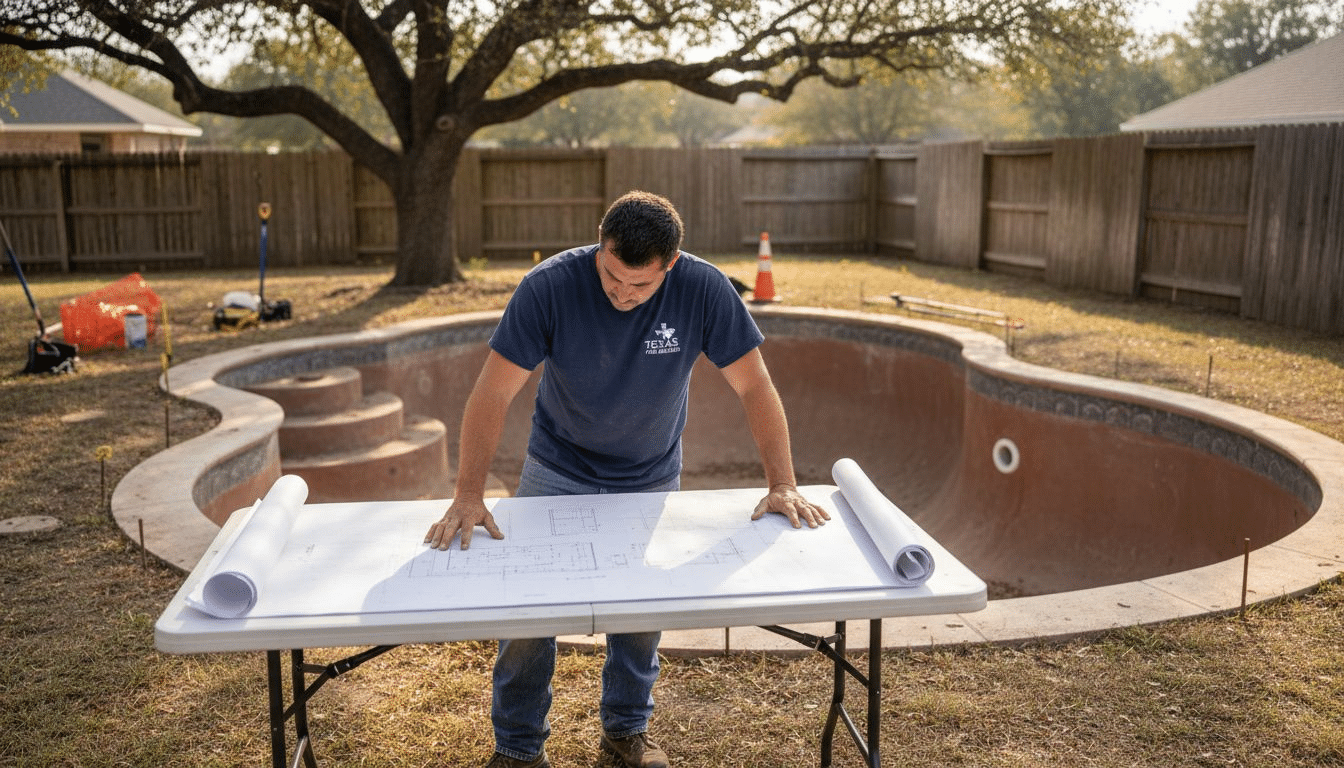
Every American homeowner dreams of a backyard oasis, but over 60 percent end up frustrated by incomplete pool projects or overlooked construction details. Custom gunite pools in Montgomery County can transform outdoor living spaces and increase property value, but navigating materials, design options, and local regulations proves challenging for many. This guide breaks down the technical terms, popular designs, essential steps, and legal requirements every Montgomery County resident should know before investing in a high-end swimming pool.
Table of Contents
- Defining Pool Construction And Key Terms
- Popular Pool Types And Core Features
- Step-By-Step Pool Building Stages
- Texas Laws And Permit Requirements
- Costs, Timelines, And Common Pitfalls
Key Takeaways
| Point | Details |
|---|---|
| Understanding Pool Construction | Pool construction requires careful planning and technical expertise, involving structural design, geotechnical assessments, and hydraulic engineering. |
| Popular Pool Options | Texas homeowners can choose from concrete, fiberglass, and vinyl pools, each with unique advantages in terms of durability and customization. |
| Navigating Regulations | Compliance with local and state laws is crucial; homeowners should work with licensed professionals to ensure all permits and safety standards are met. |
| Cost and Timeline Awareness | Budgeting should include potential unexpected expenses, with typical pool construction timelines ranging from 8 to 12 weeks. |
Defining Pool Construction and Key Terms
Pool construction represents a sophisticated engineering process that transforms your backyard into a custom aquatic retreat. Unlike simple excavation, this intricate project involves multiple specialized stages requiring precise planning, technical expertise, and strategic execution. Structural design principles underpin every successful pool installation, ensuring durability, safety, and long-term performance.
At its core, pool construction encompasses several critical technical components. Structural elements include reinforced concrete foundations, vertical retaining walls, base slabs, and carefully engineered load-bearing structures. These components must withstand significant environmental pressures, ground movement, water weight, and potential seismic activity. Construction planning integrates geotechnical assessments, hydraulic engineering, and precise architectural measurements to create a stable, functional aquatic environment.
Key terms every Texas homeowner should understand include gunite (a specialized concrete spray application), hydrostatic pressure (underground water force impacting pool structure), and hydraulic design (water circulation and filtration system layout). Professional pool builders like those serving Montgomery County utilize advanced techniques to mitigate potential structural challenges, ensuring your investment remains structurally sound through meticulous engineering and strategic material selection.
Pro tip: Request comprehensive geotechnical soil testing before pool construction to identify potential underground challenges and prevent future structural complications.
Popular Pool Types and Core Features
Texas homeowners have several distinctive pool types to choose from, each offering unique advantages for outdoor living spaces. Swimming pool configurations range from traditional in-ground designs to more contemporary installations, with materials and styles tailored to individual preferences and property characteristics. Concrete (gunite), fiberglass, and vinyl represent the primary pool construction materials, each presenting specific benefits for residential environments.
In-ground pools dominate the Texas market, particularly in regions like Montgomery County, where custom outdoor living spaces are highly prized. Concrete pools offer maximum design flexibility, allowing homeowners to create complex shapes, integrated water features, and customized depths. Fiberglass pools provide faster installation and smoother surfaces, while vinyl-lined pools represent a more budget-friendly option with relatively quick construction timelines. Water treatment methods vary across these pool types, with options including traditional chlorine systems and increasingly popular saltwater configurations.
Beyond construction materials, pool features have become increasingly sophisticated. Modern Texas pools frequently incorporate advanced elements like integrated lighting, automated cleaning systems, heating mechanisms, and smart technology controls. Homeowners can select from options such as infinity edges, tanning ledges, attached spas, custom tile work, and landscape-integrated designs that transform outdoor spaces into resort-like environments.
Here’s a quick comparison of primary pool construction materials and their long-term considerations:
| Material Type | Durability & Maintenance | Design Flexibility |
|---|---|---|
| Concrete (Gunite) | High durability, periodic re-surfacing needed | Unlimited shapes, fully customizable |
| Fiberglass | Long-lasting surface, minimal upkeep | Pre-molded shapes, moderate options |
| Vinyl | Moderate lifespan, liner replacement required | Flexible within specific layouts |
Pro tip: Consider your specific property’s soil composition, sunlight exposure, and intended usage when selecting your pool type to ensure optimal long-term performance and enjoyment.
Step-by-Step Pool Building Stages
Constructing a swimming pool involves a complex sequence of precisely coordinated stages that transform your backyard into a stunning aquatic environment. Pool construction stages require meticulous planning and execution, with each phase demanding specialized expertise and careful attention to technical details. Professional pool builders in Texas follow a systematic approach that ensures structural integrity, aesthetic appeal, and long-term functionality.
The initial stages of pool construction begin with comprehensive site preparation and assessment. This critical phase includes land surveying, soil analysis, and excavation planning. Professionals carefully evaluate ground conditions, drainage patterns, utility line locations, and potential geological challenges specific to Montgomery County. Construction methodology dictates precise measurements and strategic excavation techniques that minimize property disruption while creating the optimal foundation for your custom pool design.
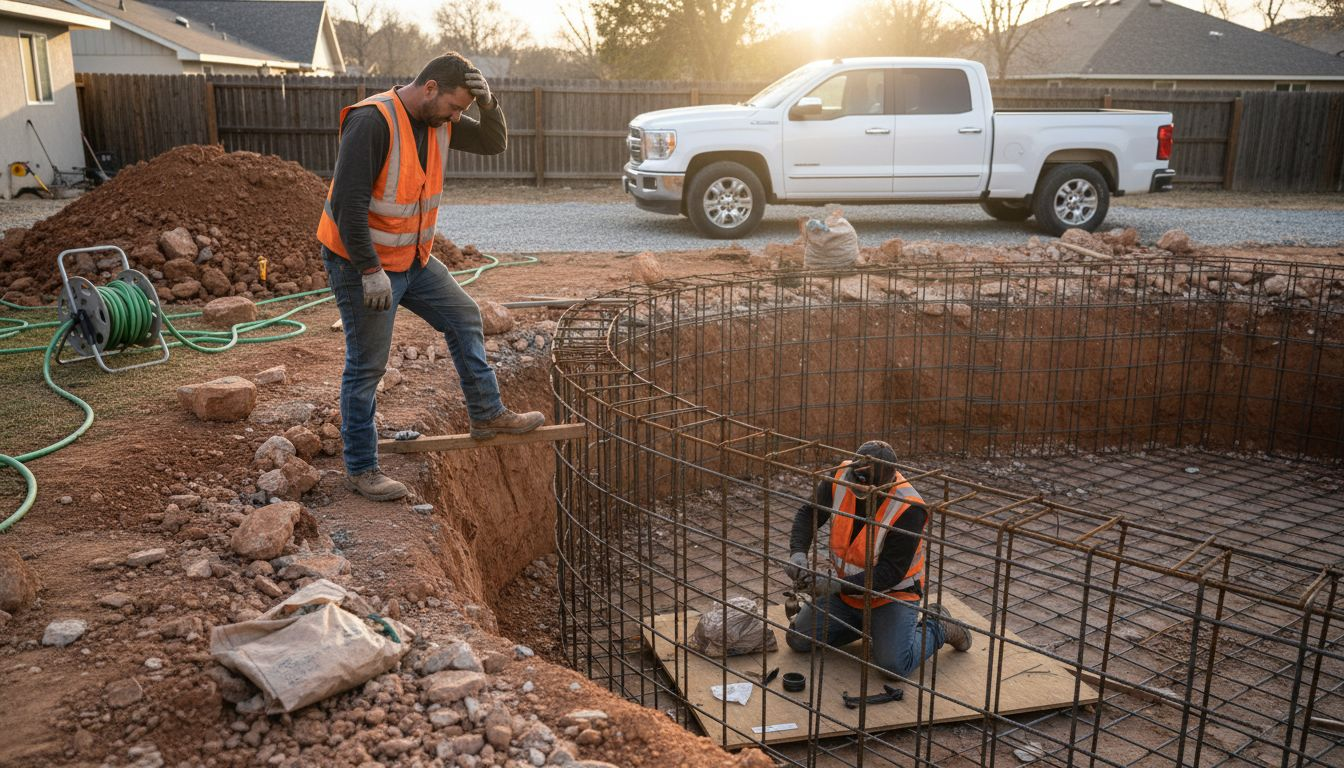
Subsequent stages involve structural formation, which typically progresses through several key steps: steel reinforcement installation, plumbing and electrical rough-in, gunite or concrete application, tile and coping placement, decking construction, and final system integration. Each substage requires specialized skills, with professional teams coordinating intricate details like precise rebar placement, hydraulic system design, and seamless integration of filtration and circulation mechanisms. Advanced pool construction in Texas now incorporates smart technology features, allowing homeowners to control lighting, heating, and cleaning systems through integrated digital platforms.
Pro tip: Request a detailed project timeline and milestone chart from your pool contractor to understand exact progression stages and set clear expectations for your pool construction project.
Texas Laws and Permit Requirements
Navigating the complex landscape of pool construction regulations requires a comprehensive understanding of state and local requirements specific to Texas residential properties. Swimming pool laws and regulations represent a critical framework designed to ensure safety, compliance, and proper installation of aquatic structures across Montgomery County and surrounding regions. Homeowners must work closely with licensed professionals who understand these intricate legal mandates.
Permit requirements typically involve multiple layers of governmental oversight. Municipal permits demand detailed site plans demonstrating precise pool placement, setback distances from property lines, and compliance with local zoning regulations. Permit documentation often requires comprehensive drawings that showcase electrical, plumbing, and structural components, ensuring each installation meets stringent safety standards. Montgomery County specifically mandates thorough inspections at various construction stages, including preliminary site assessment, structural framework, and final system integration.
Key legal considerations for Texas pool owners extend beyond initial construction permissions. Homeowners must adhere to strict safety regulations, including mandatory perimeter fencing, self-closing gates, childproof locks, and specific barrier height requirements. Additional compliance areas include electrical safety standards, proper drainage specifications, and adherence to local building codes that vary between municipalities. Professional pool contractors serving areas like Montgomery County possess intimate knowledge of these regulations, helping homeowners navigate complex permitting processes while maintaining full legal compliance.
Pro tip: Request a comprehensive permit compliance checklist from your pool contractor to ensure all local and state regulatory requirements are meticulously addressed during the construction process.
Costs, Timelines, and Common Pitfalls
Pool construction in Texas represents a significant investment requiring careful financial and logistical planning. Permit review processes can significantly impact project timelines, with administrative procedures potentially extending project completion by several weeks. Homeowners in Montgomery County should anticipate total project costs ranging from $50,000 to $125,000 depending on pool complexity, site conditions, and selected design features.
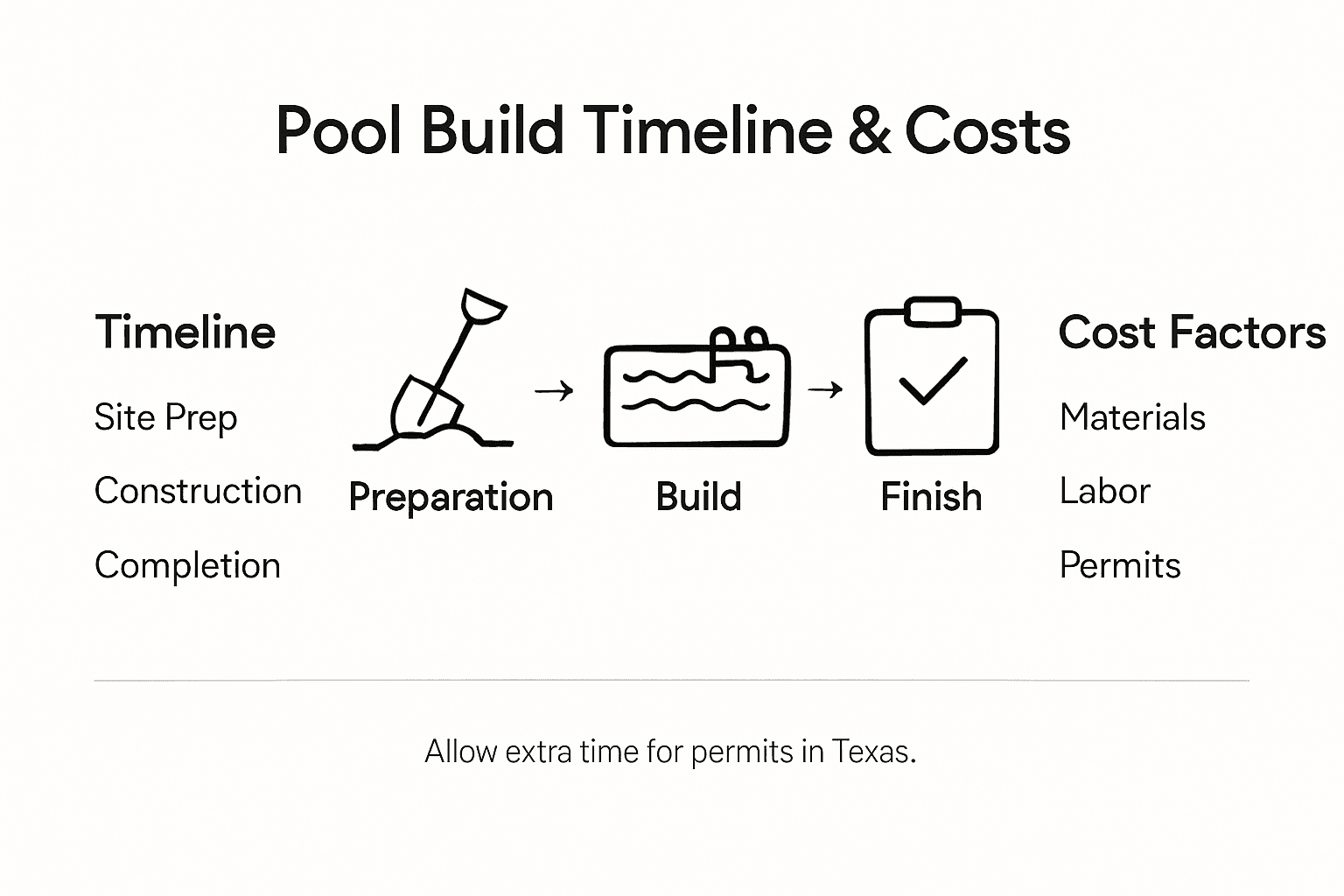
Typical project timelines for custom pool construction span approximately 8 to 12 weeks, though permitting and inspection requirements can introduce unexpected delays. Common pitfalls include inadequate site preparation, underestimating soil condition challenges, and failing to secure comprehensive municipal approvals. Budget considerations extend beyond initial construction, encompassing ongoing maintenance, potential landscaping modifications, and essential safety infrastructure like fencing and electrical systems.
Financial planning requires a comprehensive approach that accounts for multiple potential variables. Homeowners should budget an additional 10-15% above initial estimates to accommodate unexpected expenses, potential design modifications, and complex site-specific requirements. Critical cost factors include excavation complexity, custom design elements, material selections, and required infrastructure upgrades. Professional pool contractors serving Montgomery County can provide detailed cost breakdowns that help homeowners understand potential financial implications and make informed decisions throughout the construction process.
Here’s a summary of major cost factors and their impact on the pool construction budget:
| Cost Factor | Impact on Budget | Planning Recommendation |
|---|---|---|
| Site Preparation | Can increase with poor soil | Get detailed soil analysis |
| Design Complexity | Raises total costs | Prioritize must-have features |
| Permit Requirements | Adds fees, affects timelines | Allow extra time in project plan |
| Material Selection | Influences upfront expense | Evaluate longevity vs. cost |
| Safety Infrastructure | Ongoing investment | Include fencing and alarms |
Pro tip: Request a detailed, itemized contract with clear milestone payments to protect your financial interests and ensure transparency throughout the pool construction project.
Transform Your Backyard with Expert Pool Construction in Texas
Building a swimming pool is a complex journey that involves many technical details like soil analysis, structural design, and permit compliance. If you are a Texas homeowner in Montgomery County or nearby, you want a partner who understands these challenges and can guide you confidently through each step—from site preparation to the final touches. At Bliss Pools, we specialize in custom pool construction tailored to your unique property conditions, design preferences, and safety requirements. With over 15 years of experience, we handle everything including gunite application, hydraulic design, and local permit navigation to ensure your dream pool stands the test of time.
Ready to bring your backyard vision to life with a trusted local expert? Visit Bliss Pools to discover how our skilled team can create the perfect custom pool construction and luxury outdoor living features designed just for you. Don’t let regulatory hurdles or soil challenges slow your project down. Contact us today for a free consultation and start your seamless pool construction experience now.
Frequently Asked Questions
What are the key stages involved in the pool construction process?
The pool construction process includes several key stages: site preparation, structural formation, plumbing and electrical rough-in, gunite or concrete application, tile and coping placement, decking construction, and final system integration. Each stage is crucial for ensuring the pool’s structural integrity and functionality.
What should I consider when choosing a pool type for my backyard?
When selecting a pool type, consider factors such as your property’s soil composition, sunlight exposure, intended usage, budget, and the design flexibility of the pool material. Concrete, fiberglass, and vinyl each have different benefits that can affect long-term performance and satisfaction.
How do permit requirements impact the pool construction timeline?
Permit requirements can significantly impact the construction timeline, often adding several weeks to the project. Municipal permits require detailed site plans and must comply with local zoning regulations, along with inspections at various construction stages, which can cause delays if not managed efficiently.
What are common pitfalls to avoid during pool construction?
Common pitfalls include inadequate site preparation, underestimating soil conditions, failing to secure necessary municipal approvals, and not accounting for safety infrastructure like fencing. It is essential to work with a knowledgeable contractor to navigate these challenges effectively.