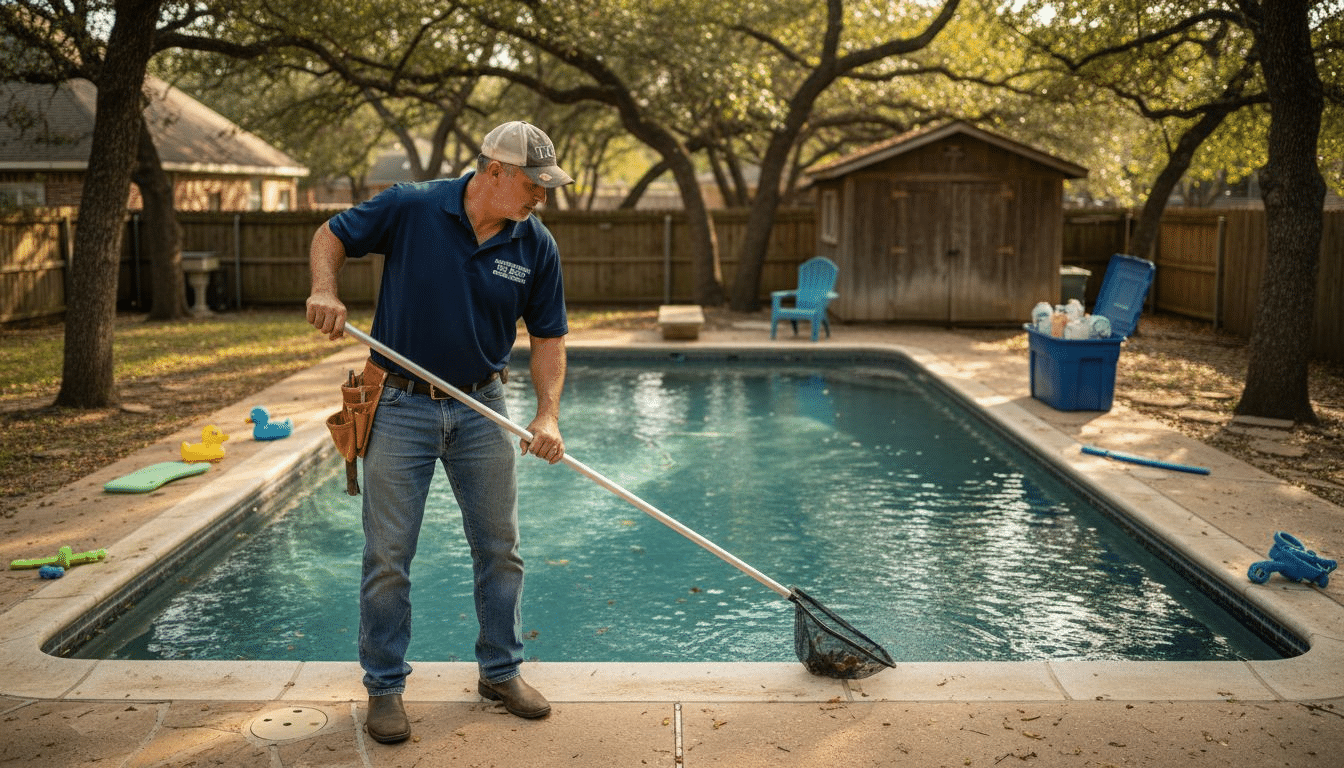
Every homeowner who invests in a luxury gunite pool dreams of years filled with safe fun and sparkling water, but Texas heat and daily use quickly reveal how much goes into keeping that dream alive. In Montgomery County, tailored pool care is more than simple cleaning—it means managing water chemistry, checking equipment, and preventing issues that can threaten both your investment and your family’s safety. This guide highlights the most important strategies and critical components of pool maintenance so you can maximize both enjoyment and peace of mind in your backyard oasis.
Table of Contents
- Defining Pool Maintenance and Its Importance
- Essential Pool Maintenance Tasks Explained
- Types of Pool Maintenance Services Available
- Seasonal Pool Care in Montgomery County TX
- Pool Owner Responsibilities and Common Mistakes
- Financial Implications and Comparing Alternatives
Key Takeaways
| Point | Details |
|---|---|
| Routine Maintenance is Essential | Consistent pool care including water chemistry testing, equipment inspections, and cleaning is crucial for safety and longevity. |
| Water Conservation is Critical | Implementing efficient practices like leak repairs and using pool covers can significantly reduce water waste. |
| Professional Services Offer Expertise | Engaging with professional technicians ensures advanced problem diagnosis and tailored maintenance strategies for optimal performance. |
| Seasonal Adaptation is Necessary | Adapting maintenance routines seasonally helps protect the pool against environmental challenges specific to the Montgomery County climate. |
Defining Pool Maintenance and Its Importance
Pool maintenance is a comprehensive strategy for preserving the safety, functionality, and aesthetic appeal of your swimming pool, particularly crucial for homeowners in Montgomery County’s challenging Texas climate. Beyond mere cleaning, pool maintenance represents a proactive approach to protecting your significant backyard investment and ensuring a safe recreational environment for family and friends.
At its core, pool maintenance involves several critical components designed to keep your aquatic retreat in optimal condition. Comprehensive water management strategies help conserve resources while maintaining water quality. These strategies include:
- Regular water chemistry testing and balancing
- Systematic equipment inspections
- Routine cleaning of pool surfaces and surrounding areas
- Monitoring filtration system performance
- Preventative maintenance of mechanical components
Proper maintenance directly impacts your pool’s longevity, operational efficiency, and user safety. By implementing consistent care protocols, Montgomery homeowners can prevent costly repairs, extend equipment lifespan, and create a more enjoyable swimming experience. Regular maintenance helps detect potential issues early, reducing the likelihood of unexpected breakdowns and expensive rehabilitation projects.
Water conservation plays a significant role in responsible pool maintenance. Efficient practices like using pool covers, fixing leaks promptly, and maintaining proper chemical balance can substantially reduce water waste and associated operational costs.
Pro tip: Develop a structured maintenance calendar tailored to your specific pool type and local Montgomery County environmental conditions to streamline your pool care routine.
Essential Pool Maintenance Tasks Explained
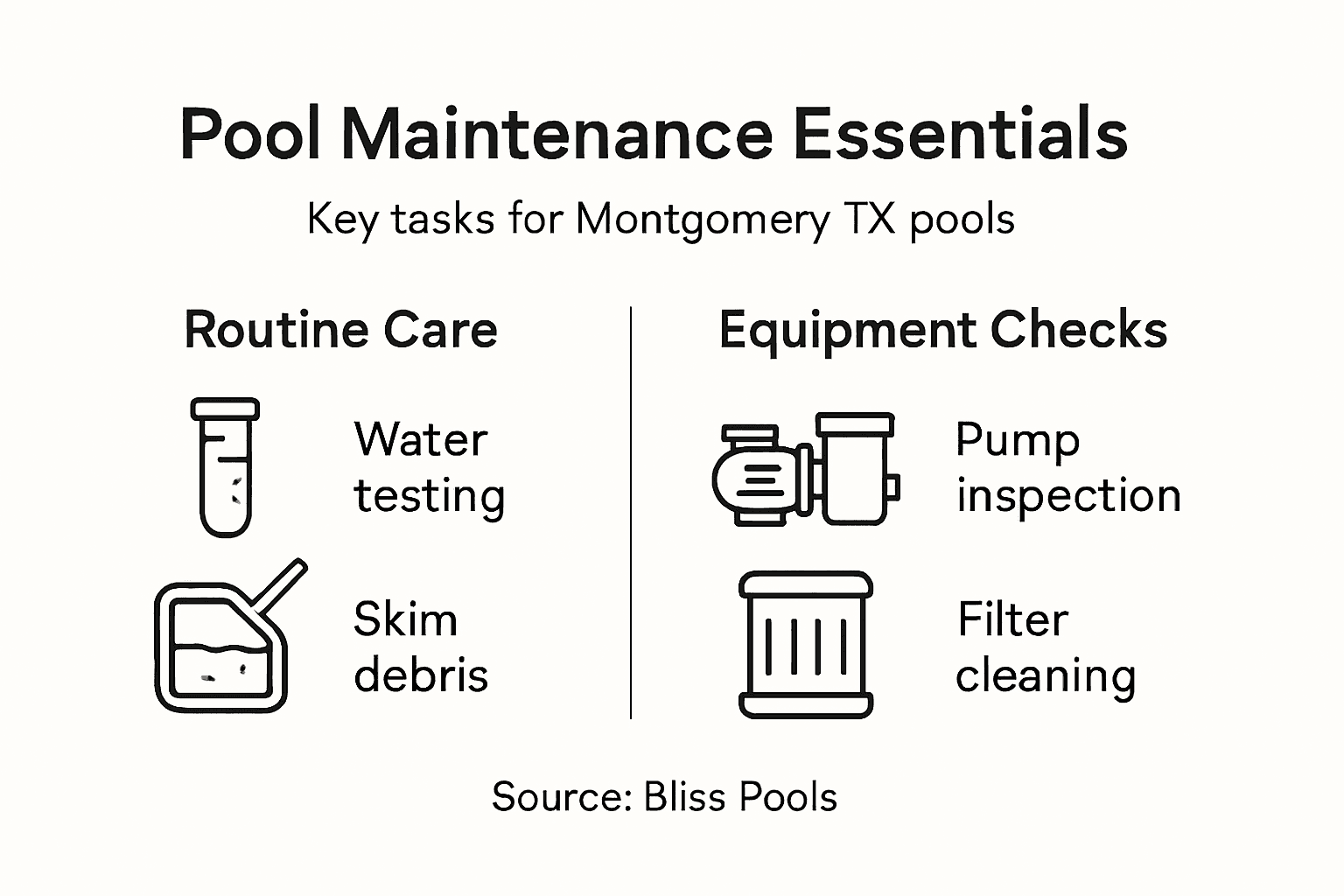
Maintaining a swimming pool in Montgomery County requires a systematic approach to ensure water quality, equipment performance, and user safety. Pool maintenance involves a comprehensive set of tasks that go beyond simple cleaning, focusing on preventative care and proactive management of your aquatic investment.
Rigorous water chemistry management is fundamental to pool health. This critical process includes:
- Testing and balancing pH levels
- Monitoring chlorine and sanitizer concentrations
- Checking alkalinity and calcium hardness
- Preventing algae and bacterial growth
- Addressing potential water contamination risks
Regular equipment maintenance represents another crucial aspect of pool care. Homeowners should prioritize systematic inspections of filtration systems, pumps, skimmers, and other mechanical components. These routine checks help identify potential issues before they escalate into costly repairs, ensuring optimal pool performance and extending the lifespan of expensive pool infrastructure.
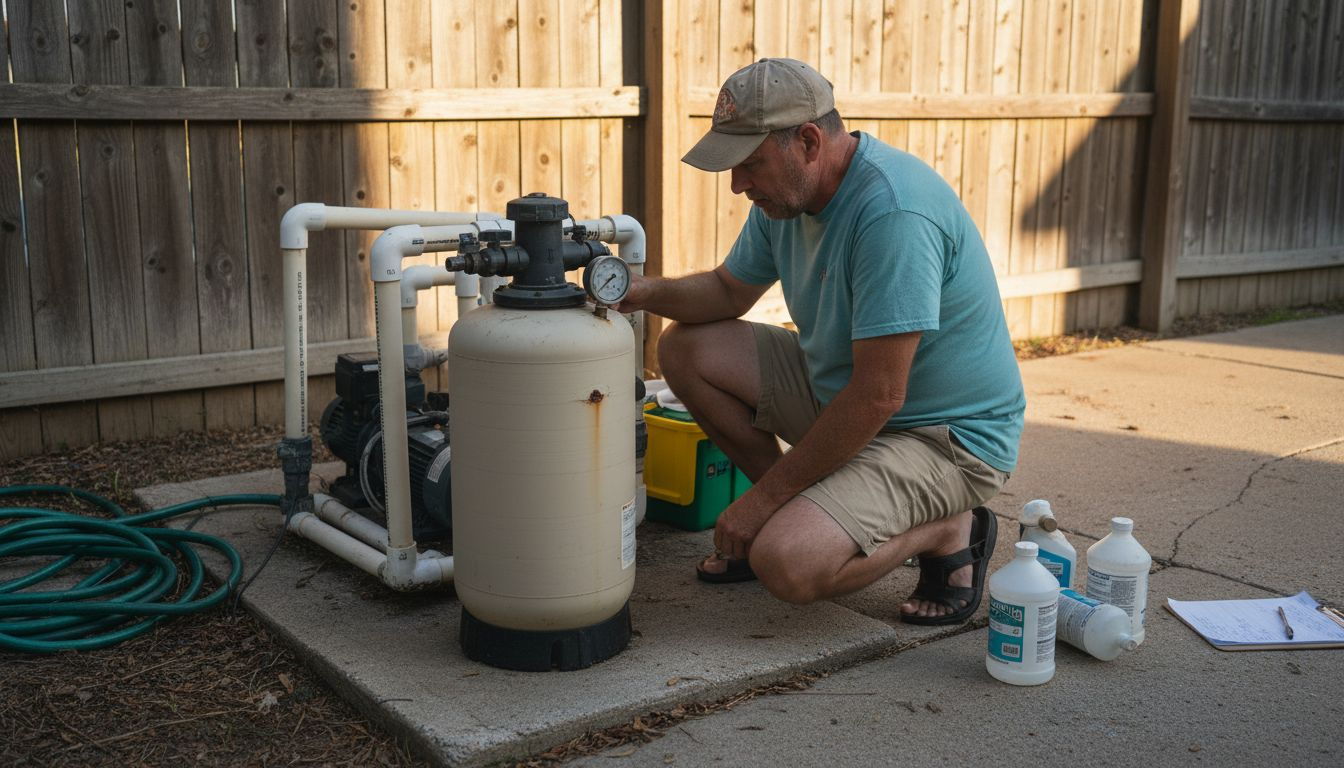
Documentation and record-keeping play a significant role in effective pool maintenance. Tracking water test results, chemical treatments, equipment repairs, and maintenance schedules creates a comprehensive history that helps monitor the pool’s long-term health and performance. This approach allows Montgomery homeowners to develop a proactive maintenance strategy tailored to their specific pool’s needs.
Pro tip: Invest in a digital maintenance log to track pool health, chemical treatments, and equipment performance, helping you stay ahead of potential issues and maintain your pool’s optimal condition.
Types of Pool Maintenance Services Available
Pool maintenance services in Montgomery County offer comprehensive solutions tailored to homeowners’ diverse needs, ensuring optimal pool performance and longevity. Professional pool maintenance services encompass a wide range of specialized care designed to protect your significant backyard investment.
Typical pool maintenance services include:
- Weekly water chemistry testing and balancing
- Comprehensive cleaning of pool surfaces and surrounding areas
- Mechanical equipment inspections and repairs
- Seasonal opening and closing procedures
- Emergency repair and troubleshooting services
- Filtration system maintenance
- Algae prevention and treatment
Homeowners can typically choose between several service levels, ranging from basic cleaning and chemical management to full-service maintenance packages. Professional technicians bring specialized expertise in diagnosing potential issues before they become costly problems, utilizing advanced diagnostic tools and years of technical knowledge to maintain pool health.
Specialized maintenance services also address unique regional challenges specific to Montgomery County’s climate. These targeted approaches consider local environmental factors such as temperature fluctuations, humidity levels, and water hardness that can impact pool equipment and water quality. Advanced services might include detailed assessments of pool structural integrity, equipment efficiency evaluations, and customized maintenance strategies.
Pro tip: Request detailed service documentation and maintenance logs from your pool service provider to track your pool’s long-term health and performance trends.
Seasonal Pool Care in Montgomery County TX
Seasonal pool maintenance in Montgomery County demands a strategic approach tailored to the region’s unique climate and environmental conditions. Efficient seasonal pool management requires homeowners to adapt their maintenance routines across different times of the year to protect their investment and ensure optimal pool performance.
Spring and summer pool care in Montgomery County typically involves:
- Thorough cleaning and debris removal
- Water chemistry rebalancing
- Equipment functionality checks
- Filter system deep cleaning
- Leak inspections
- Deck and surrounding area maintenance
- Algae prevention treatments
Fall and winter pool preparation becomes equally critical, with specific steps to protect the pool during less active months. This includes draining water to appropriate levels, installing winter covers, protecting equipment from potential freezing temperatures, and conducting comprehensive system checks to prevent potential damage during periods of reduced use.
Montgomery County’s variable climate demands a proactive approach to seasonal pool maintenance. Homeowners must consider local temperature fluctuations, humidity levels, and potential extreme weather events that could impact pool infrastructure. Professional pool services can provide tailored maintenance plans that account for these regional specificities, ensuring your pool remains in top condition throughout the year.
Pro tip: Create a detailed seasonal maintenance calendar that outlines specific tasks for each month, helping you stay ahead of potential pool care challenges.
Pool Owner Responsibilities and Common Mistakes
Pool ownership in Montgomery County involves a comprehensive set of responsibilities that extend far beyond simple recreational enjoyment. Pool maintenance best practices demand consistent attention, technical knowledge, and proactive management to protect your significant backyard investment.
Common pool owner responsibilities include:
- Regular water chemistry testing and balancing
- Consistent equipment maintenance and inspections
- Filtration system cleaning and optimization
- Monitoring water quality and safety parameters
- Understanding local pool maintenance regulations
- Addressing potential structural or mechanical issues promptly
- Implementing water conservation strategies
Frequent mistakes Montgomery County pool owners often make can compromise pool safety and efficiency. These typically include neglecting routine chemical balance checks, postponing equipment repairs, ignoring minor leaks, and failing to maintain proper water circulation. Such oversights can lead to accelerated equipment deterioration, increased maintenance costs, and potential health risks for swimmers.
Successful pool management requires a holistic approach that integrates technical knowledge, consistent maintenance, and a proactive mindset. Homeowners must develop a comprehensive understanding of their pool’s unique characteristics, local environmental conditions, and specific maintenance requirements to ensure long-term performance and enjoyment.
Here’s a summary of key pool owner responsibilities versus common mistakes to help Montgomery County homeowners better manage their pools:
| Responsibility | Common Mistake | Business Impact |
|---|---|---|
| Regular water testing | Neglecting chemical checks | Leads to unsafe water, possible health risks |
| Consistent equipment care | Postponing repairs | Causes equipment failure and costly repairs |
| Filtration optimization | Ignoring water circulation | Reduces water clarity and increases contamination |
| Prompt issue resolution | Ignoring minor leaks | Results in structural damage and higher expenses |
| Water conservation | Excessive water waste | Raises operational costs and environmental impact |
Pro tip: Create a digital maintenance log to track chemical levels, equipment performance, and repair history, helping you stay organized and proactive in your pool care routine.
Financial Implications and Comparing Alternatives
Pool ownership in Montgomery County involves significant financial considerations that extend far beyond the initial installation costs. Energy-efficient pool management strategies can dramatically reduce long-term operational expenses and provide substantial economic benefits for homeowners.
Typical pool maintenance cost categories include:
- Initial equipment installation
- Monthly chemical treatments
- Water and energy consumption
- Routine maintenance services
- Potential repair and replacement costs
- Seasonal opening and closing expenses
- Potential insurance and liability considerations
Alternative maintenance approaches can help Montgomery County pool owners optimize their financial investment. These strategies might involve investing in high-efficiency equipment, implementing automated chemical management systems, and adopting water-conservation technologies that reduce overall operational expenses. Smart homeowners recognize that upfront investments in quality equipment and efficient systems can yield significant long-term savings.
Comparing maintenance alternatives requires a comprehensive approach that considers both immediate costs and potential future savings. Factors such as equipment efficiency ratings, local utility rates, water consumption patterns, and regional climate conditions all play crucial roles in determining the most cost-effective pool management strategy for Montgomery County residents.
Use this quick reference to compare financial considerations and maintenance alternatives in Montgomery County:
| Cost Category | Standard Approach | Alternative Approach |
|---|---|---|
| Monthly expenses | Routine chemicals and cleaning | Automated dosing systems, advanced tech |
| Equipment lifespan | Manual maintenance | High-efficiency upgrades extend lifespan |
| Energy usage | Traditional pumps | Variable-speed pumps lower bills |
| Water usage | Standard filtration | Automated covers, leak detection reduce waste |
| Insurance costs | Minimal documentation | Detailed logs may lower premiums |
Pro tip: Request detailed cost-benefit analyses from professional pool maintenance services to understand the potential long-term financial implications of different maintenance strategies.
Protect Your Montgomery County Pool Investment with Expert Care
Maintaining a safe and beautiful swimming pool in Montgomery County requires consistent attention to water chemistry, equipment performance, and seasonal care. The article highlights common challenges such as neglected chemical balance, equipment wear, and climate-specific impacts that can lead to costly repairs and health risks. At Bliss Pools, we understand these pain points and help transform your backyard into a low-maintenance, resort-style retreat built to withstand local environmental factors. With over 15 years of experience, our custom pool construction and upgrade services focus on long-term durability, energy efficiency, and easy maintenance.

Ready to elevate your pool experience and reduce maintenance headaches? Visit Bliss Pools to explore our tailored pool designs and outdoor amenities that not only enhance beauty but also make upkeep simpler. Learn how we integrate solutions that address water conservation, efficient filtration systems, and seasonal protection strategies. Contact us today for a free estimate and take the first step towards a worry-free pool you will enjoy year-round. Discover why Montgomery homeowners trust Bliss Pools to safeguard and elevate their outdoor living spaces.
Frequently Asked Questions
What are the essential components of pool maintenance?
Essential components of pool maintenance include regular water chemistry testing, systematic inspections of equipment, routine cleaning of pool surfaces, monitoring filtration system performance, and preventative maintenance of mechanical components.
How can I save water while maintaining my pool?
You can save water by using pool covers, fixing leaks promptly, maintaining proper chemical balance, and employing efficient cleaning practices that reduce water waste.
What common mistakes do pool owners make in maintenance?
Common mistakes include neglecting routine chemical balance checks, postponing equipment repairs, ignoring minor leaks, and failing to maintain proper water circulation, all of which can lead to increased costs and health risks.
How can seasonal changes affect my pool maintenance routine?
Seasonal changes require tailored maintenance, such as thorough cleaning and water chemistry adjustment in spring and summer, and protecting equipment and covering the pool in fall and winter to prevent damage during less active months.
Recommended
- What Is Pool Resurfacing and Why It Matters
- 7 Best Pool Landscaping Ideas for Resort-Style Retreats
- Pool Design’s Impact on Montgomery Home Value
- Role of Landscape Design in Pools: Enhancing Outdoor Living
- Gartenpflege im Mehrparteienhaus – Was Pflicht ist und was abgerechnet werden darf
- Homeowners Insurance | Thrive Benefits