
Choosing to build a custom gunite pool in Montgomery County is much more than picking a size or shape. For homeowners seeking both beauty and performance, the real advantage lies in pool design consultation services that prioritize every detail from safety to daily use. This collaborative planning approach helps bring luxury features to life while addressing codes, technical needs, and your family’s lifestyle. You get guidance that protects your investment and ensures your new pool fits perfectly with your outdoor vision.
Table of Contents
- Defining Pool Design Consultation Services
- Key Steps In The Pool Design Process
- Aligning Pool Features With Homeowner Goals
- Safety, Legal, And Local Compliance Standards
- Maximizing Value And Avoiding Design Mistakes
Key Takeaways
| Point | Details |
|---|---|
| Importance of Design Consultation | Engaging in a design consultation ensures a comprehensive understanding of your pool’s function, aesthetics, and regulatory compliance before construction begins. |
| Safety and Compliance | A qualified design consultant integrates safety standards and local regulations into the pool design, reducing legal liabilities and enhancing family protection. |
| Cost Efficiency | Early planning identifies potential problems, helping to optimize budget and avoid costly changes during construction. |
| Personalized Design | The design process should reflect your lifestyle and preferences, ensuring the finished pool meets your actual needs and enhances your outdoor living experience. |
Defining Pool Design Consultation Services
Pool design consultation services represent a structured collaboration between you, professional pool designers, engineers, architects, and local regulatory experts. Unlike simply hiring a contractor to dig a hole and fill it with water, design consultation involves a comprehensive planning phase that addresses every aspect of your custom pool’s function, aesthetics, safety, and long-term performance. This process is especially critical for Montgomery County homeowners who want to maximize their investment in a luxury gunite pool. The consultation team works to understand your lifestyle, budget constraints, property limitations, and vision for your outdoor space before a single shovel hits the ground.
At its core, design consultation examines both technical and user-focused dimensions of your pool project. The technical side includes structural engineering, equipment selection, plumbing and electrical systems, and compliance with safety and design standards that govern swimming pools in Texas. Your design team ensures your pool meets all local building codes, zoning requirements, and health department regulations specific to the Montgomery County area. The user-focused side addresses how your pool will actually function for your family’s daily life. Will you use it for lap swimming, entertaining, recreation with young children, or a combination? Do you envision water features, lighting effects, heating systems, or integration with outdoor living spaces like patios and outdoor kitchens? These conversations shape a pool that truly serves your needs rather than simply existing in your backyard.
Design consultation also brings cost efficiency into focus early, preventing expensive changes down the road. When designers work with you during the planning stages, they identify potential problems before construction begins, optimize equipment placement to reduce installation costs, and help you prioritize amenities that matter most to your family. For homeowners in the Conroe, Spring, or Woodlands areas considering how to design a custom pool for your backyard, this consultation phase typically involves site analysis, concept sketching, material selection, budget refinement, and timeline development. You’re not locked into decisions; instead, you’re making informed choices with professional guidance at every step.
Here’s a summary of how pool design consultation aligns technical and user-focused priorities:
| Project Focus | Primary Concerns | Typical Outcomes |
|---|---|---|
| Technical Side | Structural integrity, codes | Safe, compliant pool design |
| User-Focused Side | Family needs, daily use | Personalized features |
| Cost Efficiency | Budget, lifecycle planning | Value-driven construction |
Pro tip: Schedule your pool design consultation during mild weather months (September through November in Montgomery County) when your consultant can thoroughly assess sunlight patterns, existing landscaping, and drainage issues without dealing with heat or rain complications.
Key Steps in the Pool Design Process
The pool design process unfolds in distinct phases, each building on the previous one to move you from initial concept to construction-ready plans. The journey starts with a needs assessment where your design consultant works with you to understand exactly how you’ll use the pool. Will your family swim laps? Host gatherings? Have young children who need shallow areas? This conversation shapes everything that follows. Next comes site analysis, where professionals evaluate your Montgomery County property for sun exposure, drainage patterns, soil composition, existing utilities, and setback requirements. A pool positioned to catch morning sunlight and positioned away from oak trees will function better and require less maintenance than one placed without these considerations. Your consultant also identifies potential obstacles like underground gas lines or existing drainage systems that could complicate construction.
Following the initial assessment, design development takes center stage. This phase includes creating layout sketches, selecting pool shape and size, determining equipment placement, and outlining technical specifications. Your team considers safety feature planning such as proper drain protection, deck surfacing, lighting, and any required enclosures based on Texas regulations. They also work on hydraulic system design to ensure adequate circulation and filtration for your pool’s volume. Material selections happen here too, from gunite finishes to coping styles to decking options that complement your outdoor living vision. When working with professionals on custom pool design for your backyard, you’ll receive concept drawings showing multiple perspectives of your finished pool.
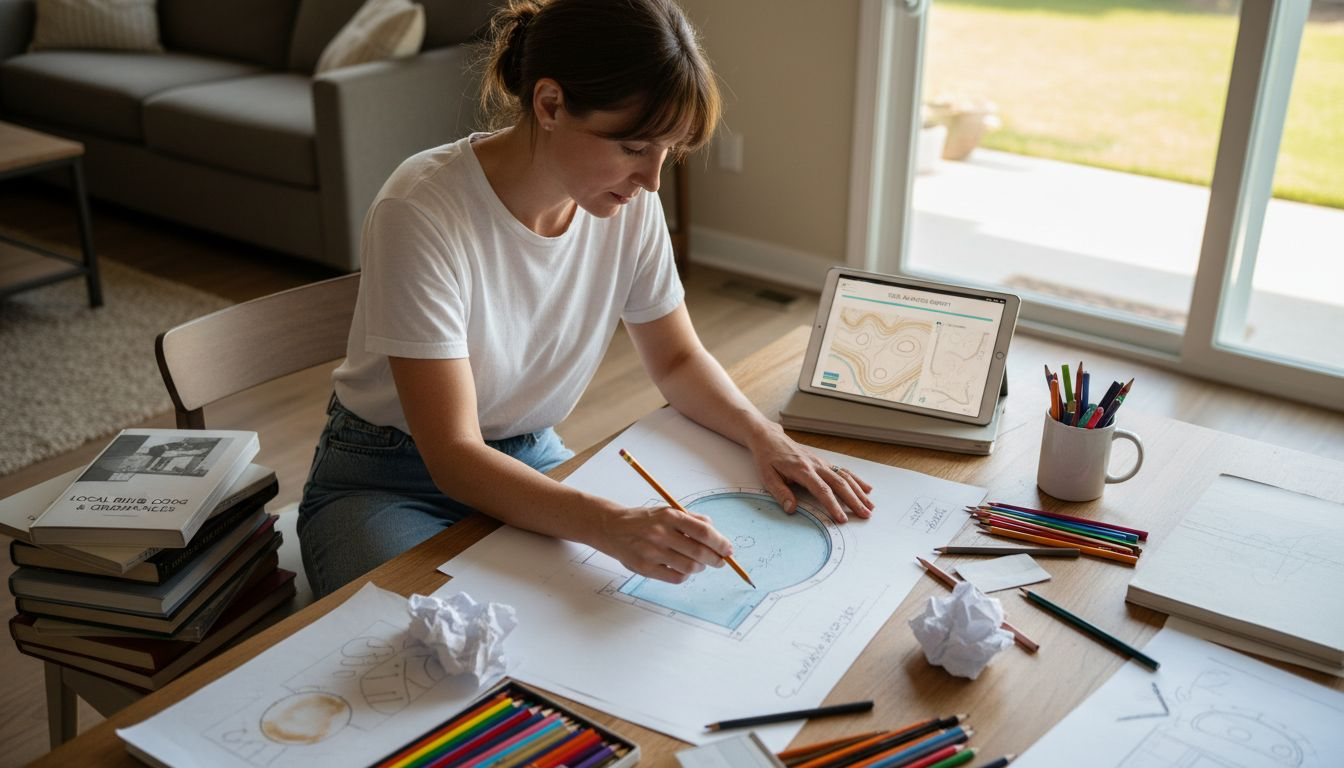
The design then moves through costing and budget refinement, where your consultant provides detailed estimates for construction, equipment, and any add-ons like outdoor kitchens or fire pits. This stage includes preparing documentation needed for permit approvals and code compliance, ensuring your plans meet all local and state requirements. Your consultant coordinates with your city’s building department to address any questions before submission. Finally, planning approval happens when your complete design package goes to local authorities for review and permitting. Once approved, you move toward the construction phase with confidence that every detail has been considered.
Pro tip: Request that your design consultant provide a detailed site plan showing exact pool dimensions, depth zones, equipment locations, and utility clearances before finalizing your design, so you can visualize exactly how the finished pool will sit in your yard.
Aligning Pool Features With Homeowner Goals
Your pool should reflect how you actually want to live, not how you think a pool should look. This fundamental principle drives the entire design consultation process. When your consultant asks detailed questions about your lifestyle, they’re not making conversation; they’re gathering the information needed to create a pool that matches your reality. Do you work from home and want a peaceful lap swimming environment? Are you an entertainer who dreams of hosting 30 people around a resort-style pool with multiple seating zones? Do you have toddlers requiring shallow areas and safety features, or teenagers wanting a diving board and deep-end tricks? Each answer shapes decisions about pool dimensions, depth zones, surface materials, and surrounding amenities that will determine your satisfaction for years to come.
The design consultation bridges the gap between what you desire and what’s technically feasible on your property. Your consultant works with you to prioritize features when budget constraints exist, because not every dream feature belongs in every backyard. A 40-foot lap pool might sound perfect until you realize it leaves no room for the outdoor kitchen you also wanted. A vanishing edge creates stunning visual impact but requires specific setback distances and elevation changes that your Montgomery County lot might not accommodate. Detailed consultations about homeowner lifestyle priorities and safety requirements help you make trade-off decisions before construction begins. Your designer might suggest creative compromises: a slightly shorter lap pool that still provides good swimming distance, or a conversation-style seating arrangement that takes up less space than traditional lounger layouts.
Beyond personal preferences, your consultant ensures the design balances aesthetic goals with functional and safety requirements that protect your family and comply with Texas regulations. A zero-entry beach section delights young children but requires specific drain protection and slope specifications. Glass fencing offers premium aesthetics while providing the visibility required by building codes. Underwater lighting creates nighttime ambiance while serving the safety function of illuminating the pool floor. When your consultant presents options with both their benefits and their implications, you understand exactly what you’re choosing. This alignment between your goals and the actual design prevents the disappointment of discovering after construction that your pool doesn’t match your expectations.
Consultants also help you think beyond the pool itself. If your goal involves entertaining, the design might coordinate the pool with custom pool building that includes outdoor kitchens, fire pits, and pergolas positioned for sightlines and conversation flow. If relaxation matters most, the design might emphasize mature landscaping buffers, quiet zones away from the main deck, and water features that mask neighborhood noise. Your personal vision combined with professional expertise creates a backyard that works beautifully for your family’s actual lifestyle.
Pro tip: Create a Pinterest board or collect images of pools you love before your design consultation, then discuss specifically what appeals to you about each one; this visual reference helps your consultant understand your aesthetic preferences far better than verbal descriptions alone.
Safety, Legal, and Local Compliance Standards
Building a custom gunite pool in Montgomery County isn’t just about creating a beautiful backyard retreat. It’s also about protecting your family and protecting yourself legally. The pool industry operates within a complex web of regulations designed to prevent drowning, entrapment, chemical injuries, and other serious accidents. Your design consultant plays a critical role in navigating these requirements from day one. When safety and legal compliance are built into the design phase rather than bolted on afterward, your pool becomes genuinely safer and you avoid costly redesigns or construction delays. The good news is that modern safety standards have eliminated many old design problems while enabling beautiful, functional pools that meet every requirement.
Texas pools must comply with the International Swimming Pool and Spa Code (ISPSC), which consolidates safety standards adopted by most American jurisdictions. This comprehensive code covers everything from suction entrapment protection mechanisms required by the Virginia Graeme Baker Act, to fencing specifications, water quality standards, drain design, and emergency systems. Your design consultant understands these requirements intimately and builds them into your pool’s design specifications. For example, modern drain designs use anti-entrapment covers and backup drain systems that prevent the tragic accidents that occurred in earlier pool designs. Your consultant also coordinates with local Montgomery County building officials to understand any additional requirements specific to your area, including setback distances from property lines, visibility requirements, and fence height specifications. Some jurisdictions have stricter requirements than the state baseline, and your consultant identifies these during the planning phase.
Beyond codes and regulations, your consultant addresses swimming pool safety requirements including fencing and maintenance standards that protect your family. A properly designed pool includes appropriate fencing (typically four-sided isolation fencing), gate mechanisms that self-close and self-latch, deck surfaces with appropriate slip resistance, and equipment placement that prevents electrical hazards. Your design determines whether utilities stay appropriately distanced from water, whether deck drainage prevents pooling water that creates slip hazards, and whether equipment is positioned where children cannot access it unsupervised. These aren’t afterthoughts; they’re core design decisions. Your consultant also ensures the design permits future maintenance and inspections, because a safe pool remains safe only when properly maintained. The design includes adequate access to equipment, proper chemical storage locations, and circulation systems sized for your pool’s volume.
Compliance also protects you from liability. When your pool is designed to meet or exceed all applicable codes, you’ve demonstrated reasonable care in its creation. Your homeowner’s insurance company gains confidence in your pool’s safety profile. If an accident occurs, documentation showing your pool was designed and built to code provides important legal protection. This is why working with qualified design consultants and contractors matters so much; they maintain the documentation and records that prove compliance.
Pro tip: Request from your design consultant a written compliance checklist showing exactly which codes and local requirements your specific pool design meets, then keep this document with your pool’s construction records and maintenance logs for your records and insurance purposes.
Maximizing Value and Avoiding Design Mistakes
The most expensive pool isn’t the one with the highest price tag. It’s the one that gets built without proper design consultation, forcing expensive changes midway through construction or leaving you with a finished product that doesn’t match your vision. Consider a common scenario: a homeowner approves a pool design without realizing the equipment placement creates constant noise near their master bedroom. Or they discover after construction that a vanishing edge they loved requires ongoing maintenance that costs thousands annually. These aren’t inevitable problems; they’re preventable mistakes that happen when design consultation gets rushed or skipped entirely. By investing time and expertise upfront, you actually save money while ensuring your pool delivers genuine value for decades.
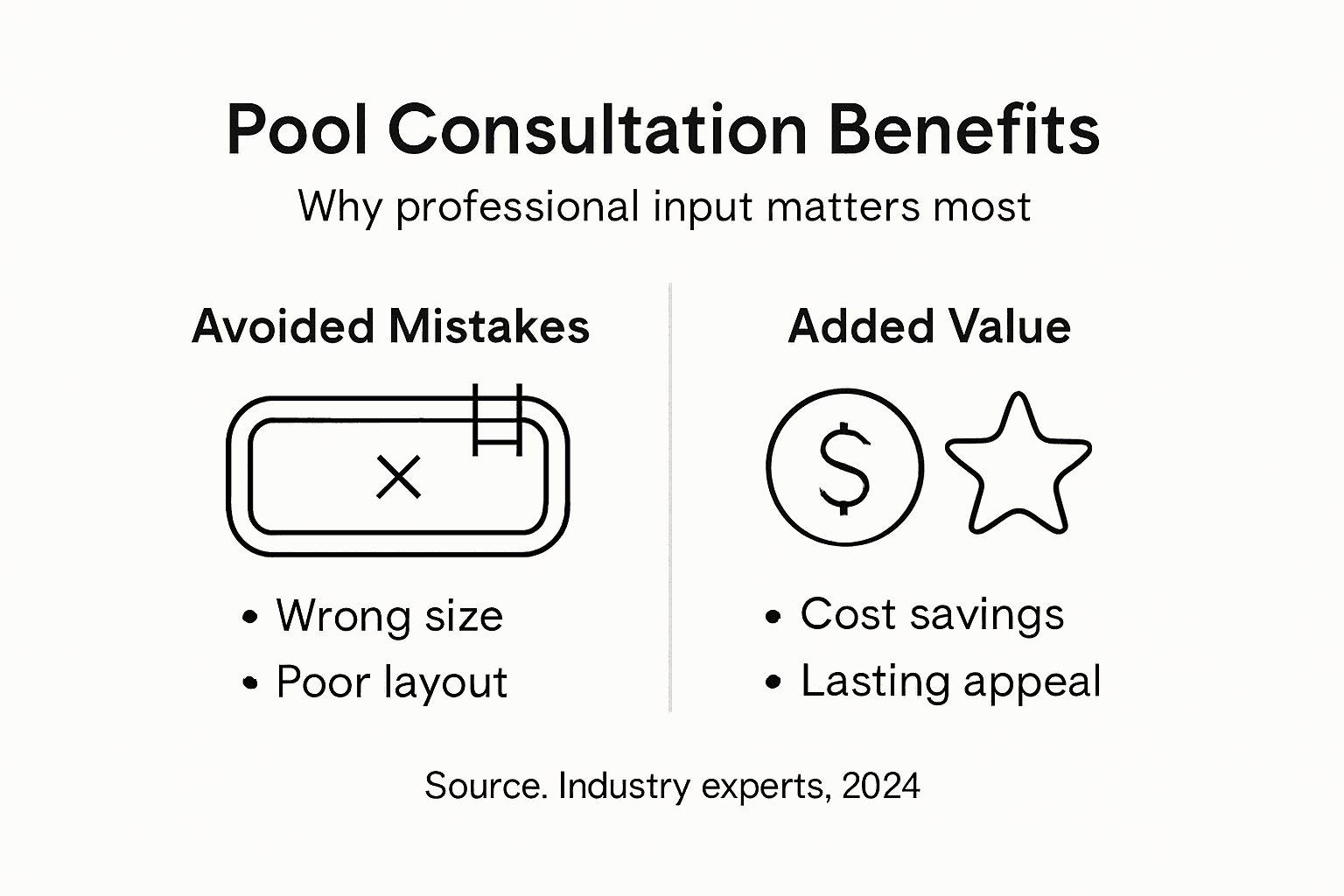
Proper consultation identifies potential problems before they become expensive change orders. Your design consultant understands how small decisions cascade through your project. For instance, moving a pool 3 feet closer to your house might seem insignificant, but it could impact drainage patterns, shade coverage, sightlines from your patio, and structural considerations for a nearby deck. When your consultant thoroughly discusses your property’s characteristics during the planning phase, they catch these interactions before construction begins. They also help you understand the true lifecycle costs of different choices. A less expensive plaster finish might seem like value, but if it requires replastering every seven years at $8,000 per job, that’s nearly $100,000 over 50 years. A more durable finish costs more upfront but delivers better long-term value. This type of analysis that focuses on budget, needs, and lifecycle costs helps you make decisions aligned with your actual financial goals.
Design consultation also streamlines the construction process itself, reducing waste and delays. When your design package is complete, detailed, and approved before the first equipment arrives, contractors work efficiently without stopping for clarifications or change decisions. They don’t have to improvise solutions to problems that should have been addressed during planning. This efficiency translates directly to cost savings. Additionally, thorough consultation prevents the design mistakes that plague hastily planned pools. Common errors include equipment pads positioned where they interfere with future deck extensions, utility lines not coordinated with plumbing routes, deck elevation changes that create accessibility problems, and water features positioned where they block sightlines you wanted. Professional consultants apply lessons learned from thousands of pools to help you avoid these pitfalls.
Meaningful value extends beyond just cost. A well-designed pool enhances your property’s appeal and functionality. It becomes a genuine destination where your family actually gathers, rather than an underutilized feature that looked good in renderings. It maintains its beauty and performance over time because the design anticipated maintenance requirements. It functions safely because safety was built in from day one. It brings genuine joy because it matches how you actually want to live. That’s real value.
Below is a comparison of common pool design mistakes and how professional consultation helps prevent them:
| Design Mistake | Possible Consequence | Consultation Benefit |
|---|---|---|
| Poor equipment placement | Noise near living spaces | Strategic layout planning |
| Overlooking code compliance | Legal issues, safety risks | Ensures regulatory adherence |
| Uncoordinated utility lines | Expensive rerouting | Early site assessment |
| Short-term material selection | High maintenance costs | Lifecycle cost analysis |
Pro tip: Ask your design consultant for a detailed breakdown showing the lifecycle costs of major design choices over 10, 20, and 30 years, so you can make decisions based on total cost of ownership rather than just initial construction price.
Transform Your Vision Into a Safe and Stunning Custom Pool
Designing a custom pool is about more than just looks. It’s about solving complex challenges like site limitations, safety compliance, and aligning your outdoor space with how your family truly wants to live. If you want to avoid costly mistakes and create a pool that reflects your lifestyle while meeting Montgomery County’s strict codes, expert pool design consultation is essential. At Bliss Pools, we understand the importance of blending technical precision with your personal vision to deliver a backyard retreat that brings lasting joy.
Experience the difference with over 15 years of professional pool construction and design expertise serving Montgomery County and nearby Texas areas. Our team helps you navigate everything from safety planning to cost optimization while incorporating luxurious add-ons like outdoor kitchens and pergolas to enhance your lifestyle. Don’t settle for less than a perfectly planned pool designed to fit your family’s needs and budget. Contact Bliss Pools today to start your free estimate and take the first step toward your dream backyard.
Frequently Asked Questions
What is the purpose of pool design consultation services?
Pool design consultation services provide a structured collaboration between homeowners and pool professionals to ensure the pool’s function, aesthetics, safety, and long-term performance are all considered during the planning phase.
How does the consultation process help in avoiding costly design mistakes?
The consultation process identifies potential issues before construction begins, helping to prevent expensive changes and ensuring that the pool is designed in a way that meets both aesthetic goals and functional requirements.
What should I expect during the pool design consultation process?
During the consultation process, you can expect a needs assessment, site analysis, design development (including layout sketches), budget refinement, and ultimate planning approval, all guided by a professional consultant.
How does pool design consultation ensure compliance with safety standards?
Consultants ensure your pool design adheres to local building codes, zoning requirements, and safety regulations, integrating features that prevent accidents, such as proper fencing, drain protection, and safe equipment placement.