

Building a custom gunite pool in Montgomery County, TX brings excitement and big decisions. Every backyard has its own limitations and hidden challenges that shape the entire pool project from the start. Before moving forward, understanding how to assess your space, estimate costs, and plan for luxury amenities can save you from financial surprises. This guide breaks down expert budgeting strategies designed for homeowners who want both sophistication and smart investments in their outdoor living space.
Table of Contents
- Step 1: Assess Your Backyard And Project Requirements
- Step 2: Estimate Essential Pool Construction Costs
- Step 3: Include Luxury Amenities And Upgrades
- Step 4: Set A Contingency Fund For Unexpected Expenses
- Step 5: Verify Total Budget And Financing Options
Quick Summary
| Key Point | Explanation |
|---|---|
| 1. Conduct a thorough site assessment | Evaluate your backyard’s dimensions, regulations, and landscape features before planning your pool design. |
| 2. Create a detailed budget estimate | Include all costs such as design, materials, labor, and set aside a contingency fund for unexpected expenses. |
| 3. Consider luxury amenities wisely | Allocate 15-25% of your budget for enhancements that improve pool functionality and aesthetics without overspending. |
| 4. Establish a robust contingency fund | Reserve 10-20% of your budget for unexpected costs to avoid financial strain during construction. |
| 5. Explore financing options thoroughly | Investigate multiple funding sources and get pre-approved for financing to ensure your project aligns with your financial ability. |
Step 1: Assess your backyard and project requirements
Starting a custom pool build requires a comprehensive evaluation of your backyard’s unique characteristics and potential challenges. Before breaking ground, you’ll need to conduct a thorough site assessment that considers multiple critical factors affecting your pool project’s feasibility and design.
Begin by carefully measuring your available space and understanding local building regulations. Your backyard’s specific dimensions, topography, and existing landscape features will significantly influence pool placement and design possibilities. Safety barrier guidelines recommend evaluating several key elements:
- Property line setbacks
- Underground utility locations
- Soil composition and drainage patterns
- Existing structures and landscaping
- Potential sun exposure and shade areas
- Natural elevation changes
Document your findings by creating a detailed plot plan that includes precise measurements and potential pool locations. This plan should account for required safety perimeters and local building codes. The City of Phoenix’s guidelines suggest considering critical aspects like equipment placement, barrier requirements, and potential zoning restrictions.
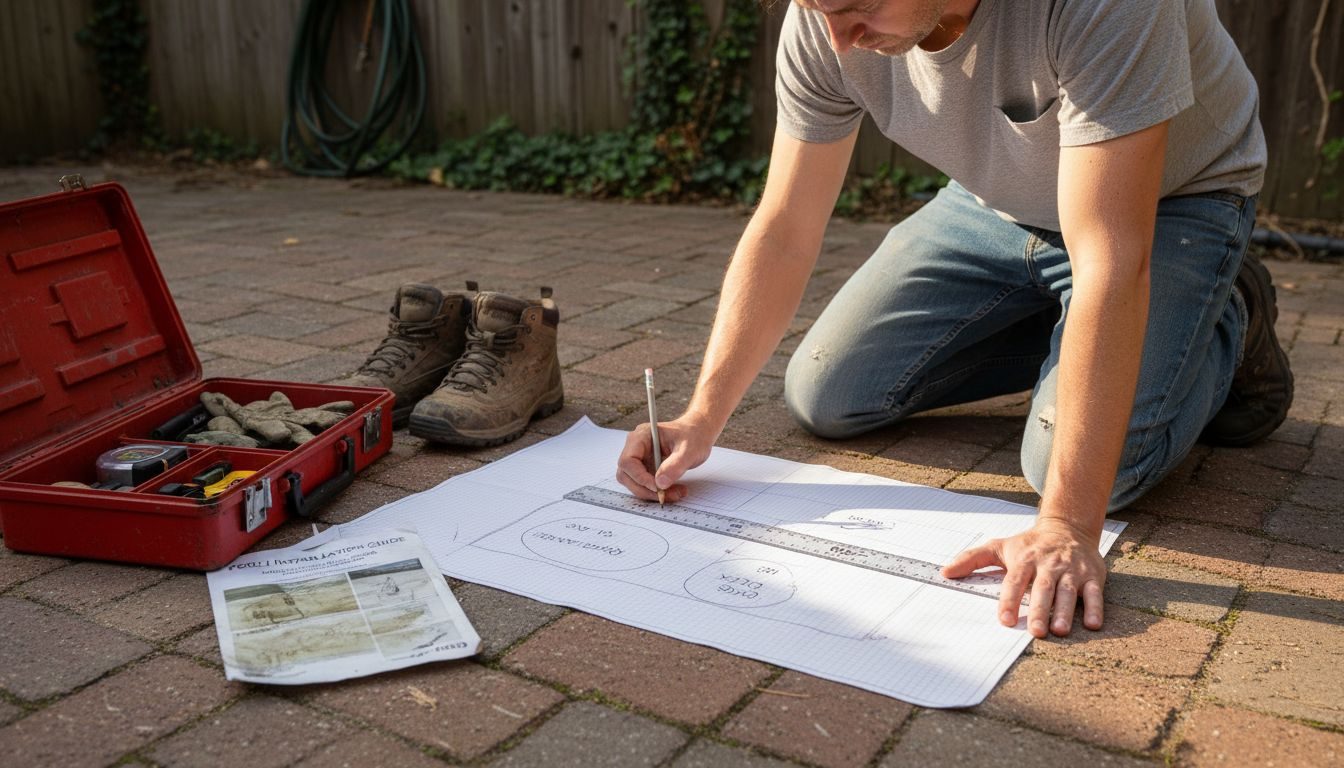
Professional surveyors can provide an exact topographical map, which helps identify potential challenges such as steep grades, rocky terrain, or drainage issues that might complicate pool construction. Understanding these factors early prevents costly surprises during the build process.
Here’s a summary of potential risks and the benefits of early backyard assessment for custom pool projects:
| Risk Factor | Influence on Project Cost | Prevention Benefit |
|---|---|---|
| Steep slopes or uneven land | May increase excavation costs | Enables accurate site planning |
| Utility line interference | Possible delays and rerouting | Helps avoid code violations |
| Poor drainage or soil issues | Raises costs for remediation | Reduces risk of future damage |
| Shade from structures/trees | Affects pool placement needs | Improves enjoyment and longevity |
Pro tip: Take multiple photos of your backyard from different angles and create a digital or hand-drawn sketch with precise measurements to share with your pool design team.
Step 2: Estimate essential pool construction costs
Estimating the total cost of your custom pool build requires a comprehensive and strategic approach that goes beyond basic material calculations. You’ll need to develop a detailed budget that accounts for multiple complex factors and potential variables throughout the construction process.
Start by understanding the comprehensive cost estimation components that contribute to your total project investment. These critical elements include:
- Initial design and architectural fees
- Materials and equipment costs
- Labor and installation expenses
- Landscaping and site preparation
- Necessary permits and inspection fees
- Equipment and mechanical systems
- Potential utility modifications
- Safety feature installations
Breakdown each cost category meticulously, recognizing that pool construction involves more than just the pool itself. Budget contingencies should typically range between 10-15% to cover unexpected expenses. Professional cost estimators recommend developing a multilayered budget that accounts for both immediate construction costs and long-term maintenance expenses.
Consider consulting multiple contractors to obtain detailed quotes and compare pricing structures. Each estimate should provide a transparent breakdown of expenses, helping you understand where your investment is allocated. Pay special attention to variations in material quality, labor rates, and potential site-specific challenges that might impact overall project costs.
Accurate cost estimation is not about finding the cheapest option, but understanding the true value of your investment across design, quality, and long-term performance.
Pro tip: Request itemized quotes from at least three different pool contractors and carefully compare not just total costs, but the specific inclusions and quality of proposed materials and workmanship.
Step 3: Include luxury amenities and upgrades
Transforming your backyard pool from standard to spectacular requires strategic planning and careful consideration of premium features that enhance both aesthetics and functionality. Luxury amenities are not just about visual appeal but about creating a personalized outdoor living experience that reflects your lifestyle and increases your property’s value.
Start by exploring swimming pool design features that elevate your pool’s overall experience. Consider these potential luxury upgrades:
- Integrated spa and hot tub sections
- Advanced LED lighting systems
- Automatic pool cover mechanisms
- Built-in sound systems
- Swim-up bars or seating areas
- Waterfall and water feature installations
- Custom tile and decorative finishes
- Automated temperature and chemical control systems
Budget allocation for these upgrades should be carefully balanced against your overall project costs. Professional designers recommend dedicating approximately 15-25% of your total pool budget to premium features that provide the most significant impact on usability and enjoyment.
Prioritize amenities that offer both aesthetic and functional benefits. Technological integrations like smart pool management systems can provide convenience while enhancing your pool’s performance and energy efficiency. Pay attention to safety standards and local regulations when selecting advanced features to ensure compliance and optimal performance.
Luxury pool amenities are investments that transform your backyard from a simple swimming area into a comprehensive outdoor entertainment environment.
Pro tip: Consult with pool design professionals who can provide personalized recommendations tailored to your specific backyard layout and lifestyle preferences.
Step 4: Set a contingency fund for unexpected expenses
Building a custom pool involves numerous potential variables that can unexpectedly impact your budget. Establishing a robust contingency fund is crucial to managing financial risks and ensuring your project remains on track without causing undue stress or financial strain.
Contingency provisions for construction projects recommend creating a strategic financial buffer to address unforeseen circumstances. Consider allocating these potential expense categories:
- Soil condition remediation
- Underground utility adjustments
- Unexpected landscaping modifications
- Material price fluctuations
- Additional permit or inspection requirements
- Equipment or machinery replacements
- Temporary site management costs
- Design modification expenses
Financial experts typically suggest reserving 10-20% of your total project budget for contingencies. This percentage can vary depending on your specific project complexity, site conditions, and potential risk factors. Budget allocation strategies should prioritize flexibility and preparedness.
Carefully document and track all potential contingency expenses, maintaining transparency with your pool construction team. Consider creating a separate savings account specifically designated for these unexpected costs to ensure funds are readily available when needed.
A well-planned contingency fund is not an expense but an investment in your project’s smooth execution and financial stability.
Pro tip: Review your contingency fund quarterly and adjust allocations based on ongoing project developments and emerging potential expenses.
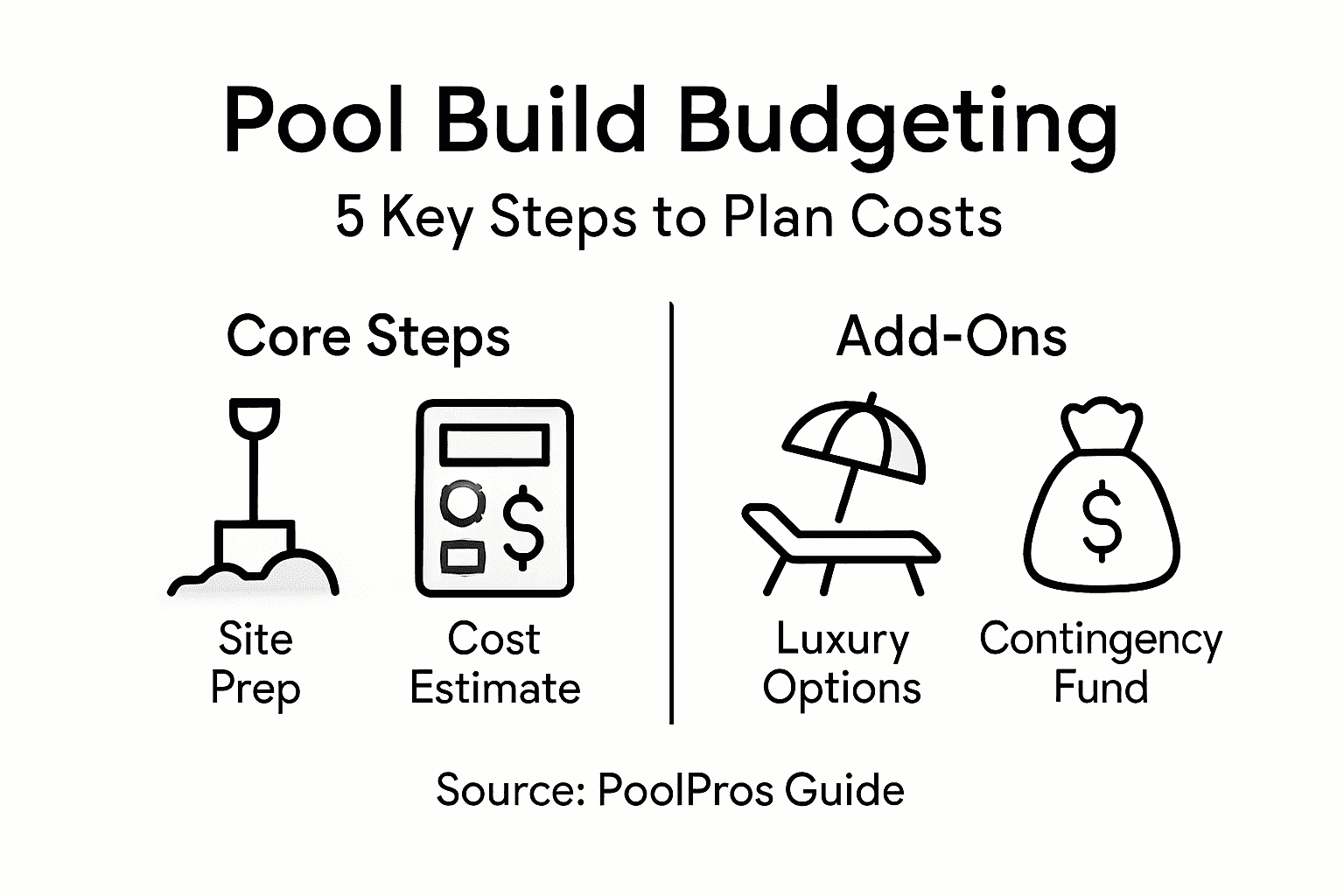
Step 5: Verify total budget and financing options
Successfully financing your custom pool project requires a strategic approach that balances your financial capabilities with your design ambitions. This critical step involves comprehensive financial planning and exploring multiple funding strategies to transform your backyard vision into reality.
Explore financing options for major construction projects that can help support your pool investment. Consider these potential funding strategies:
- Home equity lines of credit
- Personal bank loans
- Pool-specific financing programs
- Refinancing current mortgage
- Savings account allocations
- Potential home improvement loans
- Retirement account withdrawals
- Contractor-offered payment plans
Financial preparation involves more than just identifying funding sources. Carefully analyze your current financial health, including credit score, debt-to-income ratio, and long-term financial goals. Budget verification requires creating a comprehensive spreadsheet that tracks all anticipated expenses, comparing them against available funding sources.
Compare key pool financing options and important considerations:
| Financing Method | Typical Approval Speed | Key Consideration |
|---|---|---|
| Home equity line of credit | 2-4 weeks | Tied to home equity value |
| Personal loan | 1-7 days | May have higher interest rates |
| Pool-specific program | 1-2 weeks | Specialized for pool expenses |
| Contractor payment plan | 1-3 days | Terms may vary by builder |
Prioritize transparent communication with potential lenders and pool contractors. Request detailed written estimates that break down all potential costs, including materials, labor, permits, and potential contingency expenses. Consider consulting a financial advisor who specializes in home improvement projects to validate your funding strategy.
A well-structured financial plan is the foundation of a successful pool construction project, turning your backyard dreams into a tangible reality.
Pro tip: Get pre-approved for financing before finalizing your pool design to ensure your project aligns perfectly with your financial capabilities.
Take Control of Your Custom Pool Budget with Bliss Pools
Planning the perfect pool means tackling challenges like estimating construction costs, accounting for luxury upgrades, and setting aside a contingency fund. This step-by-step guide highlights how complex budgeting can be and why clear financial planning matters for turning your backyard dreams into reality. If you want to avoid unexpected expenses and create a resort-style retreat tailored to your lifestyle, expert guidance is essential.
Discover how Bliss Pools combines over 15 years of experience with a customer-focused approach to deliver high-quality custom pool builds across Montgomery County, Waller County, and Northern Harris County, TX. From initial design through luxury amenities and financing options we help you navigate every budgeting step for a seamless building experience. Start planning today with a free estimate through our custom pool construction services and let us bring your vision to life with expert craftsmanship and transparent pricing. Visit Bliss Pools now to get started on the pool you deserve.
Frequently Asked Questions
How do I assess my backyard for a pool build?
Begin by measuring your available space and noting any existing structures or landscape features. Evaluate factors like soil composition, drainage patterns, and local building regulations to understand what is feasible for your custom pool.
What costs should I include in my pool budget?
Include initial design fees, materials, labor, permits, landscaping, and equipment costs. Create a detailed budget breakdown to ensure you account for all expenses related to the pool build, aiming to set aside 10-15% for contingencies.
How much should I allocate for luxury amenities in my pool build?
Dedicate about 15-25% of your total pool budget to luxury upgrades, such as integrated spas or advanced lighting systems. Prioritize features that enhance both functionality and aesthetic appeal to maximize enjoyment.
What is the best way to create a contingency fund for unexpected pool costs?
Allocate 10-20% of your total project budget for unforeseen expenses related to soil issues, utility adjustments, or material price changes. Track potential expenses closely to ensure you have funds ready when needed.
How can I verify my total budget and explore financing options?
Create a comprehensive spreadsheet to track all anticipated expenses and compare them against available funding sources. Consider various financing options such as home equity lines or personal loans to find the best fit for your budget.
Should I consult with a professional during the budgeting process?
Yes, consulting with a financial advisor or a pool construction expert can help validate your budget and financing strategies. Engage professionals to ensure your financial plan aligns with your project goals and needs.